Our Short List of 3
All 5 Picks at a Glance
| Product | Specs | Action |
|---|---|---|
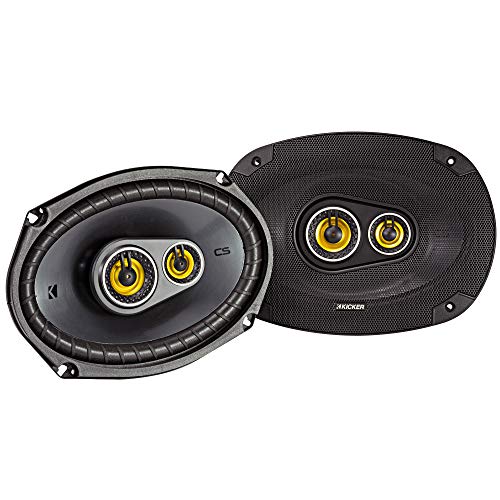 1. Kicker 46CSC6934 CS Series | Check price on Amazon | |
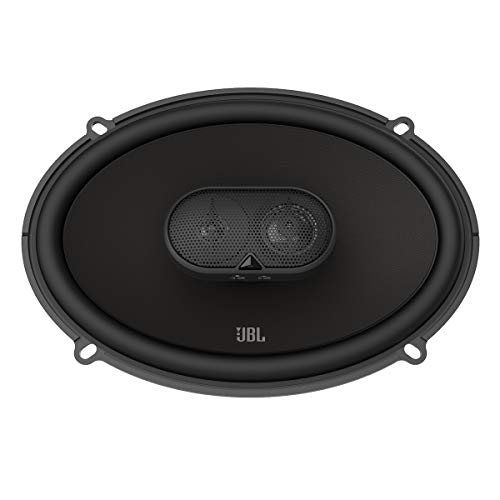 2. JBL Stadium 962M | Check price on Amazon | |
 3. Pioneer TS-A6971F A-Series Plus | Check price on Amazon | |
 4. Alpine S2-S69 | Check price on Amazon | |
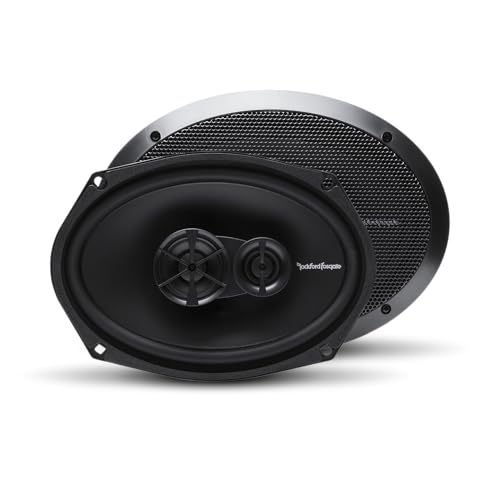 5. Rockford Fosgate R169X3 Prime | Check price on Amazon |
Key takeaways
- Best 6x9 speakers for bass compared: five 6x9 car speaker pairs from Kicker, JBL, Pioneer, Alpine and Rockford Fosgate, with power, depth and fit checks.
As an Amazon Associate we earn from qualifying purchases.
A 6×9 speaker is the closest thing car audio has to a bass shortcut. The oval cone carries noticeably more surface area than the round 6.5-inch speakers fitted to most doors, and cone area is what moves air at low frequencies. That is why 6×9 pairs have been the standard rear-deck upgrade for decades: fit a good set in place of tired factory speakers and the bottom end gains weight that a smaller driver struggles to match, without giving up boot space to a subwoofer enclosure.
This guide is deliberately narrow. Every pick is a 6×9-inch car speaker pair, chosen for its low-frequency case rather than for general value: a low published response figure, a continuous power rating that lets an amplifier actually drive the cone, a surround and motor design built for excursion, or a sensitivity figure that keeps bass present on factory power. The five pairs cover the main bass lanes in this size: a high-power three-way built around an extended voice coil, a high-sensitivity flagship with a glass-fibre cone, a four-way with the deepest published response figure here, an excursion-focused design with a specialised surround, and a simple factory replacement singled out for bass output on a budget.
One honesty note before the picks. A 6×9 pair produces midbass and low-end weight, not sub-bass. None of these speakers replaces a subwoofer for the lowest octave, and published response figures are measured under conditions each brand chooses, so a lower number is a clue rather than a guarantee. What a strong pair does deliver is kick, body, and bass guitar presence that survives road noise, which is what most listeners mean when they ask for more bass.
How to choose 6×9 speakers for bass
Start with the continuous power rating, because bass is where power goes. Moving a large cone against the air load of a car cabin takes sustained wattage, and the peak figure printed large on the box describes a momentary ceiling rather than a working level. The picks below run from 65 to 150 watts RMS per speaker. Match that range to the source: a factory head unit delivers modest continuous power, so a sensitive pair rated at the lower end will usually sound fuller on stock power than a hungry pair waiting for an amplifier. If an amplifier is already fitted or planned, the higher-rated pairs can use it, and their bass stays composed at volumes where a lightly rated pair begins to strain.
Sensitivity is the second number, and it needs its method attached. Some brands rate at 1 watt and 1 metre, others at 2.83 volts and 1 metre, and the two are not directly interchangeable. The JBL pick below uses the 2.83-volt method and quotes 94 dB, signalling a design intended to play loudly from limited power. That matters for bass specifically: low frequencies are the first thing road noise masks, so a pair that reaches listening level with power to spare keeps its bottom end audible at motorway speed.
Read the low-frequency response figure with care. The pairs here publish lower limits between 29 and 65 Hz, but the figures are not measured to one shared tolerance, and one pick below quotes its range at a minus 20 dB point, which flatters the number. Treat the figure as a ranking hint rather than a precise contest between brands, and weigh cone design alongside it: a stiff, light cone with a surround that allows controlled travel, and a motor that keeps the voice coil centred through that travel, is the mechanical recipe for clean bass. Several picks describe exactly those features, from extended voice coil motors to high-roll and multi-roll surrounds.
Fit still comes before sound. A 6×9 opening is common in rear decks and in the front doors of many trucks and larger cars, but it is not universal, and mounting depth in this group runs to a little over three inches for the deeper designs. Measure the cutout and the space behind it before ordering, especially in a door, where the window mechanism shares the cavity. Rear decks are usually more forgiving on depth and give the cone a large boot volume to work against, which is one reason the classic 6×9 bass install lives there. Adapter plates and wiring harnesses are vehicle-specific, so plan them separately where the factory fittings differ.
Finally, set expectations about crossovers. Run full range from a head unit, a 6×9 pair will try to reproduce everything, and very low signals at high volume push a cone past its comfortable travel. If the system has an amplifier or a head unit with a high-pass filter, a gentle filter below the useful range cleans up bass noticeably at volume.
Quick comparison
- Kicker 46CSC6934 CS Series: 6×9-inch 3-way coaxial pair, 150 watts RMS handling, 92 dB sensitivity, published response from 30 Hz, and grilles included.
- JBL Stadium 962M: 6×9-inch 3-way pair, 120 watts RMS, 94 dB sensitivity at 2.83 volts, published response from 35 Hz, and a 3-ohm glass-fibre design.
- Pioneer TS-A6971F A-Series Plus: 6×9-inch 4-way coaxial pair, 100 watts RMS, 92 dB sensitivity, published response from 29 Hz, and multi-fit adaptors included.
- Alpine S2-S69: 6×9-inch 2-way coaxial pair, 85 watts RMS, 90 dB sensitivity, a multi-roll surround built for cone travel, and grilles sold separately.
- Rockford Fosgate R169X3 Prime: 6×9-inch 3-way coaxial pair, 65 watts RMS, published response from 47 Hz, and grilles and mounting hardware included.
1. Kicker 46CSC6934 CS Series
The Kicker 46CSC6934 is the power pick, and its case for bass starts with the motor. Kicker describes a heavy-duty motor and magnet structure with Extended Voice Coil technology, a design intended to keep the coil in the magnetic gap through longer cone travel, which is where clean low-frequency output at volume comes from. The published specifications list a 3-way 6×9 design with a polypropylene woofer cone, a 2-inch midrange, and a half-inch PEI balanced dome tweeter, with continuous power handling of 150 watts RMS and 450 watts peak, the highest continuous rating in this guide.
The supporting figures suit an amplified build. Sensitivity is listed at 92 dB at 1 watt and 1 metre, the published effective frequency range runs from 30 to 20,000 Hz, and impedance is 4 ohms, so the pair pairs predictably with the majority of aftermarket amplifiers. The surround is a UV-treated foam design, which Kicker positions for durability in sun-exposed rear decks, exactly the location where a bass-focused 6×9 pair usually ends up.
Fit needs one check: the listed bottom-mount depth is 3-3/16 inches, deep for this group, so shallow doors should be measured carefully, while a rear deck will normally accept it. Grilles are included. Choose the Kicker pair if the system has, or will gain, an amplifier and the goal is the strongest low-end headroom a 6×9 opening can offer. On a low-power factory radio alone, its rating is headroom the system cannot yet use, and a more sensitive pair below is the better match.
2. JBL Stadium 962M
The JBL Stadium 962M is the flagship pick, built around the two specifications that decide bass on limited power: cone design and sensitivity. JBL describes a patented Plus One glass-fibre woofer cone, a design that increases effective cone area and uses a stiff, light material, paired with a hi-roll rubber surround that allows the cone to travel. Published handling is 120 watts RMS and 360 watts peak, and sensitivity is 94 dB measured at 2.83 volts, the joint highest figure in this guide, which is why this pair makes its bass case even before an amplifier enters the picture.
JBL and retailer specifications describe the 962M as a 3-way 6×9 design with an edge-driven aluminium dome tweeter, a published frequency response of 35 Hz to 40 kHz, and a nominal impedance of 3 ohms. The tweeter has a push-button output control that lets the top end be pulled back where the install position makes it bright, a useful touch in a rear deck firing up through glass. The listing names grilles, adapter rings, foam gaskets, screws, and speed clips in the box.
The 3-ohm rating is the deliberate check. JBL presents this class of design as drawing more from the available amplifier power, with the resistance of the vehicle wiring bringing the effective load closer to a conventional figure. Confirm that any separate amplifier in the system is comfortable with the load. Top-mount depth is listed at 3-3/16 inches, so the same depth check applies as with the Kicker. Choose the Stadium 962M if the priority is maximum low-end presence from head-unit or modest amplifier power, with the build quality of a flagship line behind it.
3. Pioneer TS-A6971F A-Series Plus
The Pioneer TS-A6971F is the deep-response pick. Pioneer manual specifications for this A-Series Plus model list a 4-way coaxial 6×9 design with continuous power handling of 100 watts and maximum power of 600 watts, sensitivity of 92 dB at 1 watt and 1 metre, nominal impedance of 4 ohms, and a frequency response of 29 Hz to 33 kHz. That 29 Hz lower figure is the lowest published number in this guide, with one honest caveat: Pioneer quotes the range at a minus 20 dB tolerance, so it should be read as the widest claimed reach rather than proof of the strongest output at that frequency.
The driver layout explains the design intent. The woofer measures about 163 by 237 millimetres, supported by a roughly 57-millimetre cone midrange, an 18-millimetre tweeter, and an 11-millimetre super tweeter, so the large cone covers the bass and lower midrange while smaller drivers handle the detail above it. The listing describes the model in enhanced bass terms, and the box suits a factory upgrade job: speakers with grilles, mounting screws, speaker wire, and multi-application adaptors that Pioneer describes as trimmable to match a range of factory openings.
Choose the TS-A6971F if the car has a standard 6×9 opening, the system is a conventional 4-ohm setup on head-unit or moderate amplifier power, and the appeal is a wide claimed response with a dedicated driver split. Choose a simpler two-way or three-way pick instead if the install needs to be as shallow or as basic as possible.
4. Alpine S2-S69
The Alpine S2-S69 is the excursion pick, and its bass argument is mechanical rather than numerical. Alpine integrates its High Amplitude Multi-Roll surround, described as allowing maximum cone movement while keeping the cone controlled, which is the travel a 6×9 woofer needs to produce accurate low notes at volume. The cone is a blend of polypropylene, glass fibre, and mica, chosen for light weight and stiffness. On the published figures this pair is not the deepest here: the listing gives a frequency response of 65 Hz to 40 kHz, with 85 watts RMS and 260 watts peak handling, 90 dB sensitivity at 1 watt and 1 metre from the manual specification, and 4-ohm impedance.
What it offers instead is control and range at the top. It is a 2-way coaxial design with an integrated 1-inch tweeter, and the model carries Hi-Res Audio certification with response extending to 40 kHz, suiting listeners who want their bass upgrade to come with a cleaner, more extended top end rather than a multi-driver array. The listing names bottom-mount brackets, speaker wire, screws, speed clips, and spacers in the box.
One cost note matters for exposed installs: grilles are not included, and Alpine lists its compatible grille as a separate purchase, which suits a behind-panel factory location and adds a step for a visible rear-deck install. Choose the S2-S69 if the system runs a modest amplifier, the openings are standard 6×9, and clean, controlled midbass matters more than chasing the lowest printed response figure.
5. Rockford Fosgate R169X3 Prime
The Rockford Fosgate R169X3 is the straightforward factory-replacement pick, and it earns its place in a bass guide on value: independent roundups of 6×9 speakers have singled this Prime model out for bass output in its class, and its published figures support a sensible version of that claim. Rockford Fosgate describes a 6×9 3-way full-range pair rated at 65 watts RMS with 130 watts maximum power, a polypropylene cone, and a silk dome pole-mounted tweeter and midrange, with a published frequency response beginning at 47 Hz and 4-ohm impedance.
That combination is tuned for stock systems. A 65-watt continuous rating sits comfortably within what an uprated head unit or a small amplifier delivers, the cone material is the durable standard for door and deck duty, and the integrated high-pass crossovers keep the driver split managed without an external box to mount. The kit includes grilles and mounting hardware according to the listing, with a one-year manufacturer warranty.
Set expectations plainly: this is the lowest-rated pair here for power, so it is not the choice for a large amplifier or sustained high volume, where the Kicker and JBL pairs have clear headroom. Choose the R169X3 if the job is replacing worn factory 6×9 speakers on a standard system and the goal is fuller, weightier sound from the same openings without rebuilding the system around them.
Which 6×9 speakers for bass should you buy?
Match the pick to the power source first. On a factory head unit with no amplifier planned, sensitivity decides how much bass survives the drive, and the JBL Stadium 962M makes the strongest case on its 94 dB rating and stiff oversized cone, with the Pioneer TS-A6971F close behind on a 92 dB rating and the widest claimed response. The Rockford Fosgate R169X3 is the simple version of the same job, rated honestly for stock power and supplied with its grilles and hardware.
With an amplifier fitted or planned, continuous handling becomes the deciding figure. The Kicker 46CSC6934 has the most headroom here at 150 watts RMS and a motor designed for cone travel, making it the natural rear-deck anchor for an amplified system. The Alpine S2-S69 suits the listener who wants controlled, accurate midbass and an extended top end from a two-way design, and who accepts the shallowest low-frequency claim in this group in exchange.
Three checks apply to every pick. Measure the opening and the depth behind it, because two pairs here need a little over three inches. Confirm impedance against the head unit or amplifier manual, especially for the 3-ohm JBL design. And remember the boundary of the format: these pairs add weight and kick, and a listener who wants the deepest octave should treat a strong 6×9 pair as the foundation and a subwoofer as a separate, later decision.
Frequently asked questions
Do 6×9 speakers produce good bass without a subwoofer?
They produce the strongest bass available from a standard speaker opening, because the oval cone moves more air than a round 6.5-inch driver. Expect convincing kick, bass guitar, and low-end body. The deepest sub-bass octave still belongs to a subwoofer, so a 6×9 pair is the largest step available before adding one.
Is an amplifier necessary to get bass from 6×9 speakers?
No, but it changes the ceiling. Sensitive pairs such as the JBL Stadium 962M and Pioneer TS-A6971F are designed to make their case on head-unit power. An amplifier lets the higher-rated pairs, particularly the Kicker 46CSC6934 at 150 watts RMS, hold their bass together at higher volume without strain.
Why do the sensitivity figures use different methods?
Brands measure differently. Figures quoted at 1 watt and 1 metre, such as the Kicker, Pioneer, and Alpine ratings here, are not directly interchangeable with figures quoted at 2.83 volts, such as the 94 dB ratings from JBL. Compare like with like where possible, and treat a cross-method difference of a decibel or two as method noise rather than a verdict.
Where is the best place to install 6×9 speakers for bass?
A rear deck is the classic location: the opening is usually designed for the size, depth is rarely a problem, and the boot volume behind the cone supports low-frequency output. Front doors in trucks and larger cars also use 6×9 openings, but depth and window clearance need measuring first.
What does the low number in the frequency response actually mean?
It is the lowest frequency the maker publishes, measured under that brand own conditions and tolerance. Pioneer figure for the TS-A6971F, for example, is quoted at a minus 20 dB point. Use the number to understand each design intent, and weigh power handling, sensitivity, and cone design alongside it rather than ranking pairs on that figure alone.
Disclosure
Disclosure: This article contains affiliate links. If you buy through those links, a commission may be earned at no additional cost to you. Product information was taken from the listings and manufacturer details available at the time of writing, and specifications should be confirmed on the live listing before purchase.
FAQ
Which 6×9 speakers for bass should you buy?
Do 6×9 speakers produce good bass without a subwoofer?
Is an amplifier necessary to get bass from 6×9 speakers?
Why do the sensitivity figures use different methods?
Where is the best place to install 6×9 speakers for bass?
What does the low number in the frequency response actually mean?
More from Amazon
Programs that pair well with the guide above. Offers and eligibility are set by Amazon and may change.
Free shipping on eligible items, Prime Video and more. Eligible new members can start with a free trial.
Start a Prime free trialAd-free music streaming. Eligible new subscribers can start with a free trial.
Try Music Unlimited freeA Prime membership for ages 18-24 with a trial period. Eligibility is set by Amazon.
See Prime for Young AdultsAudiobooks and podcasts to listen to on the go. Eligible new members can start with a free trial.
Try Audible freeAs an Amazon Associate we earn from qualifying purchases.