Our Short List of 3
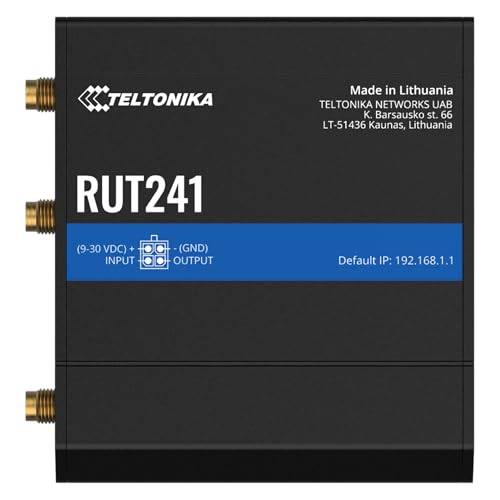
- Best for: single-device sites such as a camera, kiosk or lone controller that need dependable cellular with failover.
- Cellular: 4G LTE Cat 4, up to 150 Mbps down / 50 Mbps up, with 3G and 2G fallback
- SIM: 1 Mini SIM slot
- Ethernet: 2 x 10/100 Mbps ports (1 WAN, 1 LAN)
- Wireless: Wi-Fi 4 (802.11b/g/n) access point and hotspot

- Best for: US sites where carrier certification and a managed cloud console are requirements, not extras.
- Cellular: 4G LTE Cat 4, North America bands B2/B4/B5/B12/B13/B14/B66/B71
- SIM: dual SIM card slots
- Ethernet: 2 x 10/100 Mbps ports (LAN/WAN)
- Wireless: Wi-Fi (802.11b/g/n)

- Best for: RS485 sensor and meter networks, solar camera sites and other serial-equipment installs that need cellular backhaul.
- Cellular: 4G LTE Cat 4, up to 150 Mbps down / 50 Mbps up
- Bands: B2/B4/B5/B12/B13/B14/B66/B71
- SIM: dual SIM card slots
- Wireless: Wi-Fi IEEE 802.11b/g/n, AP and client modes
All 3 Picks at a Glance
| Product | Specs | Action |
|---|---|---|
| Teltonika RUT241 |
| Check price on Amazon |
| InHand Networks IR302 |
| Check price on Amazon |
| LINOVISION IOT-R32L |
| Check price on Amazon |
Key takeaways
- Compare the best industrial routers for remote sites: DIN-rail cellular routers with dual SIM failover, wide temperature ratings, serial ports and DC power input.
An industrial router purchase is really a decision about unattended uptime. The box will sit in a pump house, a solar cabinet, a kiosk or a control panel where nobody can power-cycle it when the connection drops, and where the temperature swings far beyond what a home router tolerates. So the real questions are not about headline speed. They are about failover behavior when a carrier goes down, input voltage ranges that match a DC power bus, mounting that fits a DIN rail, and firmware that lets you reach the device remotely after the site goes dark.
This roundup is for installers connecting remote equipment over cellular, small operations teams who need a backup WAN link at sites with no wired broadband, and integrators wiring serial devices such as PLCs and meters into an IP network. Every pick below is a purpose-built industrial cellular router sold on Amazon, chosen from its listing title and specifications: metal housing, wide operating temperature, DC terminal power, and remote management. Consumer routers with the word “industrial” pasted onto the box were left out, even when the marketing was tempting.
Quick Picks
As an Amazon Associate we earn from qualifying purchases.
| Product | Best for | Key spec from title |
|---|---|---|
| Teltonika RUT241 | A single device or camera at a small remote site | LTE Cat 4 with WAN failover in an 83 mm housing |
| InHand Networks IR302 | US deployments that need carrier certification on paper | Dual SIM, DI/DO port, UL certification |
| LINOVISION IOT-R32L | RS485 sensor networks on a tighter hardware budget | DTU gateway for RS485 devices, dual SIM slots |
How to Choose
Start With the Failover Story, Not the Speed Rating
Almost every industrial cellular router here is LTE Cat 4, capped at 150 Mbps down and 50 Mbps up on paper, and that is plenty for telemetry, camera snapshots and remote desktop sessions to a panel PC. What actually separates a good deployment from a truck roll is what happens when the primary path fails. Dual SIM models switch to a second carrier automatically when signal quality or data limits trip a threshold, and wired-WAN models can fail over from Ethernet to cellular. Decide which failure you are protecting against — a dead carrier, a cut cable, or a dead router — and buy the redundancy that matches it. A single-SIM router is fine for a camera you can drive to; it is the wrong choice for a water treatment site three hours away.
Match the Power Input and Temperature Range to the Cabinet
Industrial routers run from DC terminal blocks, not wall warts, and the input window matters. Listings here span 9-30 VDC, 9-36 VDC and 9-48 VDC, which decides whether the router can share a 12 V battery bank, a 24 V control panel supply or a 48 V telecom bus without a separate converter. Temperature ratings matter the same way: a router rated from -40°C to +70°C or +75°C survives an unheated enclosure in winter and a sun-baked cabinet in summer, while a narrower -20°C floor can mean silent shutdowns on the coldest nights. Read the listing’s stated range against your worst site conditions, not your average ones, and leave headroom at both ends.
Count the Interfaces Your Equipment Actually Needs
A router for a single IP camera needs one LAN port and nothing else. A router acting as the site gateway for a PLC rack needs more: multiple Ethernet ports, and often serial. RS232 and RS485 ports let the router speak Modbus directly to meters, drives and older controllers, replacing a separate serial device server. Digital inputs and outputs add alarm reporting and remote relay control — a door switch on a DI, a restart pulse to a hung device on a DO. GNSS is worth having only if the asset moves or the platform needs location stamps. Pay for the interface set your equipment list demands, because retrofitting a serial server later costs more than the router upgrade would have.
Plan Remote Management Before the First Install
Cellular carriers put devices behind carrier-grade NAT, so you cannot simply browse to a public IP and log in. Every router here answers that problem differently: Teltonika devices enroll in the RMS cloud platform, InHand offers its Device Manager cloud, and all of them support VPN tunnels such as OpenVPN, IPsec and WireGuard so the site joins your network instead. Pick the management model before you deploy ten units, because switching later means touching every site. Also check what the listing says about included platform access — some cloud tiers are time-limited trials, and per-device management fees belong in the project budget from day one.
The 3 Best Options
Teltonika RUT241
- Best for: single-device sites such as a camera, kiosk or lone controller that need dependable cellular with failover.
- Cellular: 4G LTE Cat 4, up to 150 Mbps down / 50 Mbps up, with 3G and 2G fallback
- SIM: 1 Mini SIM slot
- Ethernet: 2 x 10/100 Mbps ports (1 WAN, 1 LAN)
- Wireless: Wi-Fi 4 (802.11b/g/n) access point and hotspot
single-device sites such as a camera, kiosk or lone controller that need dependable cellular with failover.
it has a single SIM slot and no serial ports, so carrier redundancy and Modbus wiring both need a different model; confirm the listing variant covers your carrier’s LTE bands before ordering.
The RUT241 is the compact end of Teltonika’s industrial line, and it suits the common case: one site, one or two wired devices, and a cellular link that must stay up without supervision. It pairs LTE Cat 4 with 3G and 2G fallback, a Wi-Fi hotspot for local access during commissioning, and automatic WAN failover between its Ethernet WAN port and the cellular modem. The aluminum housing is small enough for crowded kiosk and signage cabinets, it mounts on a DIN rail, and it runs the same RutOS firmware as its larger siblings, so VPN, firewall and RMS remote management behave identically across a mixed fleet.
InHand Networks IR302
- Best for: US sites where carrier certification and a managed cloud console are requirements, not extras.
- Cellular: 4G LTE Cat 4, North America bands B2/B4/B5/B12/B13/B14/B66/B71
- SIM: dual SIM card slots
- Ethernet: 2 x 10/100 Mbps ports (LAN/WAN)
- Wireless: Wi-Fi (802.11b/g/n)
US sites where carrier certification and a managed cloud console are requirements, not extras.
the temperature floor is -20°C rather than -40°C, and there is no serial port, so very cold unheated enclosures and RS485 device networks are poor fits.
The IR302 is the certification-led pick for North American deployments. Its listing leads with official certification for AT&T, Verizon and T-Mobile plus PTCRB, which matters when a carrier or a corporate IT policy asks for paperwork before a SIM gets activated. You get dual SIM slots for carrier failover, a DI/DO port for basic alarm and control wiring, and InHand’s cloud Device Manager for keeping a fleet visible without site visits. The wide 9-36 VDC terminal input fits the 12 V and 24 V supplies found in most panels, and the compact metal case mounts on a DIN rail or wall.
LINOVISION IOT-R32L
- Best for: RS485 sensor and meter networks, solar camera sites and other serial-equipment installs that need cellular backhaul.
- Cellular: 4G LTE Cat 4, up to 150 Mbps down / 50 Mbps up
- Bands: B2/B4/B5/B12/B13/B14/B66/B71
- SIM: dual SIM card slots
- Wireless: Wi-Fi IEEE 802.11b/g/n, AP and client modes
RS485 sensor and meter networks, solar camera sites and other serial-equipment installs that need cellular backhaul.
confirm your carrier’s APN and band support against the listing before deployment, and note the firmware and documentation ecosystem is smaller than Teltonika’s.
The IOT-R32L is built around one job the other two do not cover: acting as a DTU gateway for RS485 equipment. Its listing describes data transmission for RS485 devices such as IoT sensors, PLC machines, cash registers and smart meters, with digital input and output for remote control on the same terminal block. Around that serial core it wraps a full industrial router feature set — dual SIM slots for network backup, Wi-Fi in access point and client modes, three high-performance magnetic-base antennas for weak-signal locations, and full North American band coverage including B66 and B71 for rural reach. The diecast aluminum enclosure is IP30 rated and mounts on a DIN rail or wall.
Which One Fits Your Situation
One Camera or Controller at a Site Nobody Visits
Take the Teltonika RUT241. Its single SIM and two Ethernet ports match a one-device install exactly, the WAN failover keeps the link alive if you later add a wired connection, and the -40°C to +75°C rating covers unheated enclosures without a second thought. RMS enrollment means the first troubleshooting session happens from your desk, not from a ladder at the site.
A Fleet Rollout Under a Carrier or Compliance Policy
Choose the InHand Networks IR302. The listing’s AT&T, Verizon and T-Mobile certification, plus PTCRB and UL marks, gives procurement the documentation it asks for, and dual SIM slots still provide carrier failover in the field. Device Manager keeps the fleet’s status in one console. Just keep deployments inside its -20°C temperature floor or budget for a heated enclosure.
Serial Meters and Sensors That Must Report Over Cellular
The LINOVISION IOT-R32L is the fit, because its RS485 DTU function is the point of the product rather than an accessory. Wire the meter string to the terminal block, set the transparent transmission parameters, and the dual SIM cellular link carries readings back with a backup network ready. The 9-48 VDC input also tolerates the varied DC supplies found in metering cabinets.
A Mixed Fleet You Want Under One Management Login
Standardize on the Teltonika RUT241 for the simple sites and keep the same RutOS workflow everywhere. One firmware family means one set of configuration templates, one VPN design and one RMS console for training and spares. When a future site needs serial ports or dual SIM, the larger RUT-series models slot into the same management habits instead of starting a second platform.
Common Mistakes
- Buying the wrong regional variant: industrial routers ship in North American, European and global band versions, and a listing title that does not name your carrier’s bands is a warning, not a detail.
- Assuming a data SIM is included or that a phone SIM will work: most listings ship hardware only, and carriers often require an IoT or data-only plan for routers.
- Mounting the router inside a sealed metal cabinet with the antennas inside too: the enclosure becomes a Faraday cage, so use the external antenna connectors and route antennas outside.
- Ignoring the power window: feeding a 9-30 VDC router from a 48 V bus, or a wide-input model from an undersized supply, causes damage or brownout resets that look like network faults.
- Skipping remote management setup at install time: enrolling devices in the vendor cloud or VPN after deployment means a site visit per router, which defeats the purpose of buying manageable hardware.
Frequently Asked Questions
What makes a router “industrial” instead of just a cellular router?
The listing tells you: a metal housing instead of plastic, a stated wide operating temperature range, DIN rail or wall mounting, DC terminal power input across a broad voltage window, and features aimed at unattended sites such as automatic failover and remote management. If a product page shows none of those, it is a consumer hotspot in a rugged-looking shell.
Do these routers include a data plan or SIM card?
No. The listings sell the hardware, sometimes with antennas and a power supply in the box. You supply a SIM and a data plan from a carrier the router is certified or band-compatible with, and for the Teltonika and InHand models you may also choose whether to pay for cloud management features beyond any included trial period.
Can an industrial router replace a wired internet connection entirely?
For telemetry, cameras, point-of-sale backup and small remote sites, yes — that is the primary use case for every model here. For bandwidth-heavy loads, remember these are LTE Cat 4 devices with a 150 Mbps theoretical ceiling and real-world speeds set by signal and plan. Sites needing sustained high throughput should look at Cat 6 or 5G industrial models instead.
Why do some models have RS485 and digital I/O while others do not?
Because they target different equipment. Routers like the LINOVISION IOT-R32L are built to front serial devices — meters, sensors, PLCs — and to report switch contacts or drive a relay. Pure connectivity models like the RUT241 skip those ports to stay small and cheaper. Match the port list to the devices at your site rather than paying for interfaces nothing will plug into.
FAQ
What makes a router “industrial” instead of just a cellular router?
Do these routers include a data plan or SIM card?
Can an industrial router replace a wired internet connection entirely?
Why do some models have RS485 and digital I/O while others do not?
More from Amazon
Programs that pair well with the guide above. Offers and eligibility are set by Amazon and may change.
Free shipping on eligible items, Prime Video and more. Eligible new members can start with a free trial.
Start a Prime free trialAd-free music streaming. Eligible new subscribers can start with a free trial.
Try Music Unlimited freeA Prime membership for ages 18-24 with a trial period. Eligibility is set by Amazon.
See Prime for Young AdultsAudiobooks and podcasts to listen to on the go. Eligible new members can start with a free trial.
Try Audible freeAs an Amazon Associate we earn from qualifying purchases.