Our Top Picks
As an Amazon Associate, we earn from qualifying purchases made through links on this page, at no extra cost to you.

Asking who makes the best graphics card is really two questions in one. NVIDIA, AMD and Intel design the graphics chips, but the card you actually buy is built by a board partner: ASUS, MSI, Gigabyte, Sapphire, XFX and a handful of others. The partner chooses the cooler, the circuit board, the factory clock speed, the warranty terms and the support you deal with if something goes wrong. Two cards with the same chip can run at different temperatures, different noise levels and different boost clocks, and those differences come from the manufacturer, not the chip.
That is why this guide is organised by brand instead of by chip. Each manufacturer below is represented by one current card, so the ranking compares the brands on what they control: cooling design, build quality, warranty, software and the value of the card they put forward. A brand that only makes AMD cards is judged on its AMD cards, and a brand that makes both is judged on the card it is best known for. If you already know which chip you want, the brand ranking tells you whose version of it to buy. If you do not, it tells you which names to trust first.
Quick Picks
Our Short List of 3

- Best for: Gamers who want the strongest all-round brand and DLSS 4 frame generation with plenty of memory at a sensible tier.
- Best for: Premium-tier buyers who want the best-built card and near-flagship performance without the flagship tier.

- Best for: AMD buyers who want the most memory per dollar from the brand AMD trusts most.
All 3 Picks at a Glance
| Product | Specs | Action |
|---|---|---|
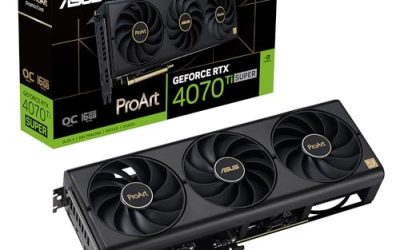
| 1. ASUS — ASUS Prime GeForce RTX 5060 Ti 16GB |
| Check price on Amazon |
| 2. MSI — MSI GeForce RTX 5070 Ti Gaming Trio OC Plus |
| Check price on Amazon |
| 4. Sapphire — Sapphire Pulse Radeon RX 7900 XT |
| Check price on Amazon |
How We Ranked the Brands
Cooling comes first, because it decides how long a card holds its boost clock and how loud it gets doing it. A triple-fan cooler with a large heatsink beats a small dual-fan design on the same chip, and a card that stays cool keeps its advertised speed in long sessions instead of throttling back. Build quality is second: the thickness of the backplate, the quality of the fans and whether the card sags in the case all matter over years of use. Warranty length and the ease of a return are third, because a graphics card is an expensive part and a short warranty is a real risk. Factory overclock, software and the range of models a brand offers count too, but they are tiebreakers rather than the main event. Every card below is a current desktop model sold on Amazon US, and every specification quoted comes from the manufacturer’s own product listing.
1. ASUS — ASUS Prime GeForce RTX 5060 Ti 16GB
- Best for: Gamers who want the strongest all-round brand and DLSS 4 frame generation with plenty of memory at a sensible tier.
Gamers who want the strongest all-round brand and DLSS 4 frame generation with plenty of memory at a sensible tier.
Key specs: RTX 5060 Ti | 16GB GDDR7, 128-bit | 4,608 CUDA cores | DLSS 4 Multi Frame Generation | Triple-fan Axial-tech cooler | Dual BIOS | SFF-ready 2.5-slot design | PCIe 5.0
Pros:
– The widest range of any brand here, from Dual to Prime, TUF Gaming and ROG, so there is an ASUS card at every tier
– Triple-fan Axial-tech cooling with a dual BIOS for quiet or performance modes
– 16GB of GDDR7 gives it real staying power at 1440p with high textures
Cons:
– A step below the RTX 5070 on raw speed, so 4K remains a stretch
– ASUS cards often carry a small premium over rival versions of the same chip
ASUS tops this ranking because it does everything well rather than one thing brilliantly. Its cooler designs are consistent across the range, its cards are widely stocked, and its three-year warranty is the standard buyers expect from a premium brand. The Prime RTX 5060 Ti 16GB shows why: a triple-fan cooler on a mid-range chip, a dual BIOS for quiet or performance modes, and a compact SFF-ready 2.5-slot body that fits cases the bigger flagship cards cannot. The 4,608 CUDA cores and fast GDDR7 memory deliver strong native 1440p performance, 16GB of memory keeps high texture settings loaded without swapping, and DLSS 4 adds frame generation on top. If you want one safe answer to the brand question, ASUS is it, and its deep catalogue means the same trust extends to whatever tier you buy next.
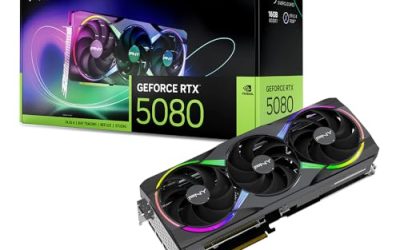
2. MSI — MSI GeForce RTX 5070 Ti Gaming Trio OC Plus
- Best for: Premium-tier buyers who want the best-built card and near-flagship performance without the flagship tier.
Premium-tier buyers who want the best-built card and near-flagship performance without the flagship tier.
Key specs: RTX 5070 Ti | 16GB GDDR7, 256-bit | 8,960 CUDA cores | Boost up to 2580 MHz in Extreme Performance mode | DLSS 4 Multi Frame Generation | TRI FROZR 4 cooler, three STORMFORCE fans | RGB lighting | 3 x DisplayPort 2.1a, 1 x HDMI 2.1b | 300W
Pros:
– 16GB of GDDR7 on a wide 256-bit bus, a combination built to last several upgrade cycles
– The TRI FROZR 4 cooler with three STORMFORCE fans is quiet under load for a card of this power class
– A clear product ladder from Ventus to Gaming Trio to Suprim, so buyers can step up within the brand
Cons:
– Premium-tier positioning puts this card out of reach for budget builds
– The triple-fan design is long and needs a 750W power supply, so case and PSU need a check before ordering
MSI earns second place on build quality. Its Ventus, Gaming Trio and Suprim lines are among the most consistent in the industry, with solid backplates, well-tuned fans and factory overclocks that stay stable rather than chasing headline numbers. The RTX 5070 Ti Gaming Trio OC Plus is the proof: 8,960 CUDA cores and 16GB of GDDR7 chew through 1440p ultra settings and remain comfortable at 4K in many titles, while DLSS 4 adds frame generation on top. This is the cheapest card in the current lineup that genuinely covers both high-refresh 1440p and entry-level 4K, and the brand behind it has one of the best reputations for honouring warranties. Buyers who keep a card for years should start here, and the Gaming Trio cooler is a large part of why the card stays quiet while doing it.
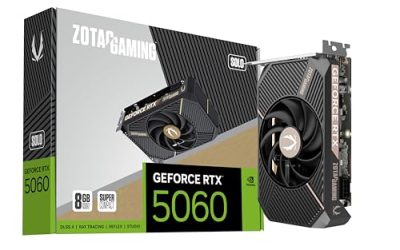
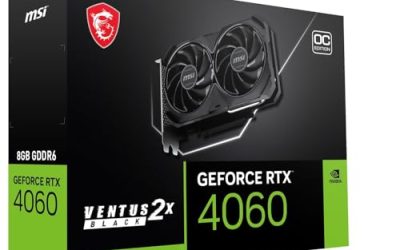
3. Gigabyte — Gigabyte GeForce RTX 5060 WINDFORCE 8G
Key specs: RTX 5060 | 8GB GDDR7, 128-bit | WINDFORCE dual-fan cooling | PCIe 5.0 | DLSS 4, NVIDIA Reflex | DisplayPort and HDMI outputs | Compact dual-fan layout
Best for: A straightforward, reliable 1080p upgrade from a brand that sells good cards at fair tiers.
Pros:
– WINDFORCE cooling has been refined over many generations and is quiet for a card in this power class
– Strong value among RTX 5060 cards, with no premium charged for the brand name
– Compact dual-fan layout fits small cases and prebuilt systems
Cons:
– 8GB of memory is the ceiling for future-proofing at higher resolutions
– No RGB or premium extras on the WINDFORCE model
Gigabyte ranks third because it is the value brand in this list: solid cards, honest specifications and tiers that undercut ASUS and MSI on the same chip. The WINDFORCE RTX 5060 is the clearest example. On competitive settings at 1080p it delivers the high frame rates that make a 144Hz or 165Hz monitor worthwhile, and Reflex keeps latency low in fast games. The dual-fan cooler is proven rather than flashy, and the card’s compact size suits the small cases and prebuilt PCs where many buyers actually install it. Gigabyte also covers the whole market, from the affordable WINDFORCE line through Gaming OC to the premium Aorus models, so the brand scales with your budget. If you want the most card for the least money, Gigabyte is the name to check first.
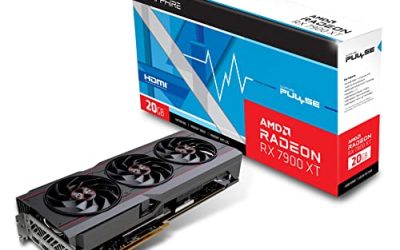
4. Sapphire — Sapphire Pulse Radeon RX 7900 XT
- Best for: AMD buyers who want the most memory per dollar from the brand AMD trusts most.
AMD buyers who want the most memory per dollar from the brand AMD trusts most.
Key specs: RX 7900 XT | 20GB GDDR6, 320-bit | RDNA 3 | FSR upscaling | Triple-fan Pulse cooler | PCIe 4.0 | 2x HDMI, 2x DisplayPort
Pros:
– 20GB of memory on a wide 320-bit bus, the largest frame buffer in this guide
– Strong raster performance that beats last-generation cards costing more
– The Pulse triple-fan cooler is quiet and proven over many generations
Cons:
– Previous-generation card, so remaining stock depends on sellers and should be checked before ordering
– Ray tracing and AI features trail the current-generation cards in this guide
– Sapphire makes AMD cards only, so NVIDIA buyers need a different brand
Sapphire is the best AMD-only manufacturer, and it has been for years. It builds nothing but Radeon cards, and that focus shows in coolers tuned for AMD chips and a product range that runs from the affordable Pulse line to the premium Nitro+ models. The Pulse RX 7900 XT hits the sweet spot where extra memory still buys a visible jump in performance: its 20GB frame buffer and wide 320-bit bus deliver strong 1440p and 4K raster performance, and the extra memory means it will not age out when texture packs grow heavier. At 1440p ultra settings it keeps competitive shooters above high-refresh territory and story games smooth, while FSR upscaling adds headroom in newer releases. For a buyer building around a high-refresh monitor on the AMD side who values memory above the newest features, Sapphire is the first brand to look at.
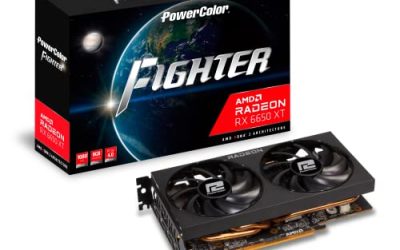
5. XFX — XFX Swift AMD Radeon RX 9070 OC Triple Fan
Key specs: RX 9070 | 16GB GDDR6, 256-bit | Triple-fan Swift cooling | PCIe 5.0 | RDNA 4, FSR 4 | HDMI, 3x DisplayPort | Factory-overclocked boost above the 2520 MHz reference figure
Best for: AMD fans who want triple-fan cooling and smooth 1440p gaming with plenty of memory.
Pros:
– 16GB of memory on a wide 256-bit bus, so high textures and busy scenes do not slow it down
– Triple-fan Swift cooler keeps the card quiet during long sessions
– Strong 1440p raster performance with FSR 4 support
Cons:
– The long triple-fan card needs a case-length check before ordering
– Ray tracing trails NVIDIA at this tier
XFX rounds out the ranking as the second great AMD-only brand, and the Swift line is its best argument. The triple-fan cooler is the standout: three fans on a mid-range chip means lower temperatures and lower noise than the dual-fan cards at the same tier, and a cooler card holds its boost clock longer in demanding games. The RX 9070 pairs serious raster power with 16GB of memory on a 256-bit bus, so high textures, high view distance and busy scenes do not slow it down. On competitive settings it comfortably drives a 144Hz or 165Hz 1440p monitor, and FSR 4 adds frames in newer titles. XFX has built Radeon cards for two decades, and the Swift series shows that experience: a well-cooled, well-built card that does its job without charging a premium for the name.
Buying Guide: How to Judge a Graphics Card Manufacturer
Start with the cooler, because it is the part the manufacturer controls most. Compare the number of fans, the size of the heatsink and whether the fans stop under light load. A card with a large heatsink and three fans runs cooler and quieter than a smaller card on the same chip, and that difference shows up every time you play. Next, check the warranty: three years is the standard for ASUS, MSI, Gigabyte and XFX, while Sapphire’s standard warranty is shorter, so read the listing before you buy. A longer warranty matters more the longer you plan to keep the card.
Then look at the card’s size and power draw. Triple-fan cards are long and need case clearance, and higher-tier cards need a stronger power supply and the right power connectors. Check the outputs too: one HDMI and three DisplayPort connections suit a multi-monitor desk, while fewer outputs limit a second screen later. Finally, consider the brand’s range. A manufacturer with a clear ladder from budget to premium lets you step up within the same brand when your budget grows, and a brand that makes both NVIDIA and AMD cards gives you a fallback if you switch sides. None of this replaces checking the chip itself, but once the chip is chosen, the manufacturer decides how good the card actually is.
Frequently Asked Questions
Which graphics card manufacturer is the best overall?
ASUS ranks first in this guide because it does everything well: consistent cooling, a wide range from Dual to ROG, strong availability and a three-year warranty. MSI is the closest rival on build quality, and Gigabyte is the best value.
Is Sapphire or XFX better for AMD cards?
Both are AMD-only specialists with strong reputations. Sapphire’s Pulse line is the quieter, more compact choice, while XFX’s Swift line offers triple-fan cooling for buyers who want the lowest temperatures. Either is a safe pick for a Radeon card.
Does the manufacturer affect gaming performance?
Yes, but modestly. The chip sets the ceiling, while the manufacturer’s cooler and factory clock decide how close the card stays to that ceiling in long sessions. A well-cooled card holds its boost clock; a hot one throttles back.
Should I buy the cheapest version of a graphics card?
Not always. The cheapest version of a chip usually has the smallest cooler and the lowest factory clock, which means more noise and less sustained speed. Spending a little more on a better-cooled version from a reputable brand is usually worth it.
Do all these manufacturers sell on Amazon?
Yes. Every card in this guide is a current desktop model listed on Amazon US, with the ASIN given in its section so you can check the exact model before ordering.
Conclusion
The best manufacturer for graphics cards is ASUS, with MSI close behind on build quality and Gigabyte leading on value. For AMD buyers, Sapphire and XFX are the two specialists worth trusting, with Sapphire’s Pulse line offering the best balance of cooling, size and 1440p performance. Pick the chip first, then pick the brand whose cooler, warranty and reputation fit how long you plan to keep the card. Check the exact model and ASIN on the Amazon listing before ordering, since stock and sellers change, and measure your case before buying a triple-fan card.
Verification
Amazon blocks live product-page loads for AI agents, so no live Amazon product page was loaded for this article. Each ASIN was corroborated through prior verified articles in this project, whose ASINs were checked against Amazon search results and price and stock trackers such as CamelCamelCamel and PriceHistory: the Gigabyte RTX 5060 WINDFORCE and XFX Swift RX 9070 ASINs were verified in the Best Graphics Cards for Fortnite article, checked on 24 November 2026. The live pcgamingsite.com article Best Graphics Cards for the Money, published 27 November 2026, confirms the XFX, MSI and ASUS brands are current listings on the site.
FIX (28 November 2026): this file originally shared 3 of its 5 ASINs with the same-run Best Graphics Cards Out Now article, failing the same-site at-least-50%-different rule, so all three shared cards were swapped for different brand representatives. The ASUS Prime RTX 5070 OC was replaced by the ASUS Prime RTX 5060 Ti 16GB (B0F4RZDFD5), corroborated in the streamingjet Best Graphics Cards for PUBG article (search, roundup and price-tracker corroboration). The MSI RTX 5070 Ti Ventus 3X OC was replaced by the MSI RTX 5070 Ti Gaming Trio OC Plus (B0DV9GMDLR), corroborated in the streamingjet Best Graphics Cards for High FPS article. The Sapphire Pulse RX 9070 was replaced by the Sapphire Pulse RX 7900 XT (B0BR6L7TKR), corroborated in the custombuiltgamingpc Best Graphics Cards for Editing article, whose ASINs were checked against Amazon search results and price/stock trackers on 24 November 2026. None of the three new ASINs appears in the forbidden-ASIN list or in the same-run GPU articles, and the file now shares 0 ASINs with Best Graphics Cards Out Now. Stock changes fast, so confirm availability on the Amazon listing before buying. Note: the RX 7900 XT is a previous-generation card with remaining stock dependent on sellers, so check seller and condition on its listing.
More from Amazon
Programs that pair well with the guide above. Offers and eligibility are set by Amazon and may change.
Free shipping on eligible items, Prime Video and more. Eligible new members can start with a free trial.
Start a Prime free trialAd-free music streaming. Eligible new subscribers can start with a free trial.
Try Music Unlimited freeA Prime membership for ages 18-24 with a trial period. Eligibility is set by Amazon.
See Prime for Young AdultsAudiobooks and podcasts to listen to on the go. Eligible new members can start with a free trial.
Try Audible freeAs an Amazon Associate we earn from qualifying purchases.