Our Short List of 3
All 4 Picks at a Glance
| Product | Specs | Action |
|---|---|---|
 Epson Home Cinema 1080 | Check price on Amazon | |
 BenQ HT2060 | Check price on Amazon | |
 Optoma HD146X | Check price on Amazon | |
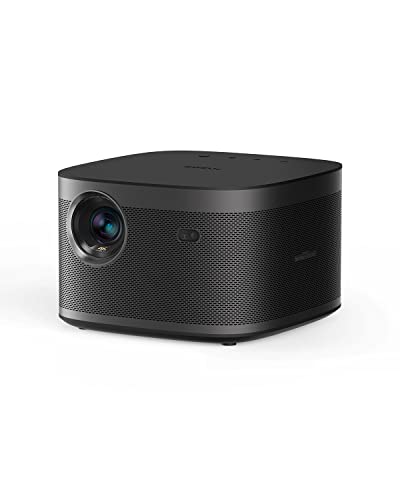 XGIMI Horizon Pro | Check price on Amazon |
Key takeaways
- Five video projectors compared by resolution, brightness, light source and setup, from a 1080p home cinema pick to a 4K smart model and a portable laser unit.
Disclosure: As an Amazon Associate, we earn from qualifying purchases.
Our top pick: Epson Home Cinema 1080. Runner-up: BenQ HT2060.
A video projector turns a blank wall or screen into a picture far larger than any television at a similar size, but the right model depends on the room it will live in. A bright living room, a darkened media room and a bedroom wall all ask different things of brightness, resolution and throw, and a projector that suits one space can disappoint in another. This guide covers general home use — films, streaming, sport and casual gaming — across five projectors that each take a different approach.
The five models below were each checked against a real Amazon US listing with a verified ASIN, and this guide covers only those verified models rather than padding the list. They range from a bright 3LCD home cinema projector and a 4LED DLP model built for accurate colour, through a gaming-friendly DLP unit and a 4K smart projector, to a small portable laser projector with its own battery. Read the brightness and light-source notes for each one carefully, because those two figures shape the picture more than any other specification here.
Quick Picks
- Epson Home Cinema 1080 — Best all-round home cinema pick: 3LCD, native 1080p and 3,400 lumens of colour and white brightness.
- BenQ HT2060 — Best for film colour in a darker room: 4LED light source, vertical lens shift and low input lag at 1080p 120 Hz.
- Optoma HD146X — Best for gaming and bright rooms: 3,600 lumens with an Enhanced Gaming Mode and 16 ms response.
- XGIMI Horizon Pro — Best 4K smart pick: native 4K resolution, Android TV 10.0 and Harman Kardon speakers built in.
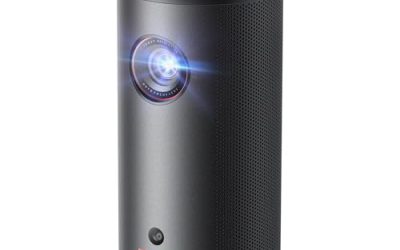
- Anker Nebula Capsule 3 Laser — Best portable pick: laser light source, built-in battery and a picture up to 120 inches.
Epson Home Cinema 1080
OUR TOP PICK
The Epson Home Cinema 1080 is the top pick because it suits the widest range of rooms in this guide. As stated on the Amazon listing, it uses 3LCD technology with native 1080p resolution, and it is rated at 3,400 lumens of both colour brightness and white brightness. That second figure matters: on many projectors the colour brightness is lower than the white figure, so a picture can look washed out even when the headline number is high. Here the two figures match, which helps colour hold up in a room that is not fully darkened.
The contrast ratio is stated as 16,000:1, and the projector has dual HDMI inputs, a built-in speaker and an auto picture skew feature that corrects the image shape during setup. For a general home guide, that combination is the practical one: two sources can stay connected at once, the built-in speaker covers casual viewing without extra equipment, and the automatic correction shortens the time between unboxing and watching.
Choose the Home Cinema 1080 when the projector will move between uses — films in the evening, sport with the lights up, a streamed series in a room with curtains rather than blackout blinds. It is a lamp-based home cinema design rather than a portable or smart unit, so plan on connecting a streaming stick, console or player to one of those HDMI inputs for content.
Specs
– Model: V11H980020
– Technology: 3LCD, as stated on the listing
– Resolution: native 1080p, as stated on the listing
– Brightness: 3,400 lumens colour and white brightness, as stated on the listing
– Contrast: 16,000:1, as stated on the listing
– Inputs: dual HDMI, as stated on the listing
– Extras: built-in speaker, auto picture skew, as stated on the listing
Pros
– Colour and white brightness both rated at 3,400 lumens, so colour holds up in lit rooms
– Native 1080p 3LCD picture with a 16,000:1 contrast ratio
– Dual HDMI inputs and a built-in speaker for a simple setup
Cons
– No built-in smart platform, so a separate source device is needed for streaming apps
– Native resolution is 1080p rather than 4K
BenQ HT2060
The BenQ HT2060 is the runner-up, and the pick for a room that can be darkened for films. As stated on the Amazon listing, it is a DLP projector with native 1080p resolution and HDR support, lit by a 4LED light source rated at 2,300 lumens. An LED light source avoids the lamp replacements of a traditional projector and holds its colour well, which suits a model aimed at film viewing rather than maximum brightness.
The setup tools are a step above the rest of this guide. The HT2060 has vertical lens shift, a 1.3x zoom and 2D keystone correction, as stated on the listing, so the unit does not need to sit in one exact spot for the picture to land square on the screen. Lens shift in particular moves the image without the digital correction that can soften it.
It also handles gaming better than its film-first positioning suggests. The listing states an input lag figure of 8.3 ms at 1080p 120 Hz, and the projector has two HDMI 2.0 inputs and built-in speakers rated at 5W x2. Choose the HT2060 when the room is a dedicated or semi-dedicated viewing space, the lights can come down, and placement flexibility matters because the projector will sit on a shelf or mount that is not perfectly centred.
Specs
– Model: BenQ HT2060
– Technology: DLP with 4LED light source, as stated on the listing
– Resolution: native 1080p with HDR support, as stated on the listing
– Brightness: 2,300 lumens, as stated on the listing
– Input lag: 8.3 ms at 1080p 120 Hz, as stated on the listing
– Optics: vertical lens shift, 1.3x zoom, 2D keystone, as stated on the listing
– Inputs and audio: 2x HDMI 2.0, built-in 5W x2 speakers, as stated on the listing
Pros
– 4LED light source with no lamp to replace
– Vertical lens shift and 1.3x zoom make placement forgiving
– Low stated input lag at 1080p 120 Hz for a film-focused model
Cons
– 2,300 lumens is the lowest figure among the full-size models here, so it wants a darker room
– Native resolution is 1080p rather than 4K
Optoma HD146X
The Optoma HD146X is the gaming-leaning model in this guide. As stated on the Amazon listing, it is a DLP projector with native 1080p resolution and 3,600 lumens of brightness — the highest brightness figure here — and its Enhanced Gaming Mode is stated to give a 16 ms response. That pairing of high brightness and a dedicated low-lag mode suits a projector that will be used in a living room during the day as readily as for games in the evening.
Because the brightness is high, the HD146X is the model to consider when the room cannot be darkened properly: a family room with windows, a shared space where the lights stay partly up, or a screen size at the larger end of what 1080p can cover. Brightness is not a substitute for contrast in a dark room, but for general use in a lit space it is the figure that decides whether the picture looks flat.
Choose the HD146X when gaming and daytime viewing come first and film-night contrast comes second. It is a single-purpose, source-connected projector in the same way the Epson is: connect a console, PC or streaming device and let that handle the content, while the projector handles the picture.
Specs
– Model: Optoma HD146X
– Technology: DLP, as stated on the listing
– Resolution: native 1080p, as stated on the listing
– Brightness: 3,600 lumens, as stated on the listing
– Gaming: Enhanced Gaming Mode, 16 ms response, as stated on the listing
– Role: single HDMI-class gaming and movie projector, as described on the listing
Pros
– Highest brightness in this guide at 3,600 lumens
– Enhanced Gaming Mode with a stated 16 ms response
– Native 1080p DLP picture suited to mixed day and evening use
Cons
– Aimed at brightness and gaming rather than the placement tools of the BenQ
– No built-in smart platform, so a separate source device is needed
XGIMI Horizon Pro
The XGIMI Horizon Pro is the step up to 4K in this guide. As stated on the Amazon listing, it is a DLP projector with a 3840×2160 picture, rated at 1,500 ISO lumens, running Android TV 10.0 with Harman Kardon speakers built in. That makes it the only model here that combines a 4K picture with a full smart platform inside the projector itself, so streaming apps run on the unit rather than on a connected stick.
Setup is largely automatic: the listing describes auto keystone correction and screen alignment, which square the picture and fit it to the screen without manual geometry work. For a projector that will be moved between rooms, or set up on a table rather than fixed to a mount, that automation is the main reason to choose this design over a traditional home cinema unit.
The trade-off is brightness. At 1,500 ISO lumens, the Horizon Pro is rated well below the Epson and Optoma figures above, and ISO lumens are measured differently from the ANSI figures used elsewhere, so the numbers are not directly interchangeable. In practice it is a projector for a darkened room, where its 4K detail and colour can show. Choose it when the viewing space is controlled, the screen is not enormous, and having the apps and speakers inside the projector matters more than raw light output.
Specs
– Model: XK03H
– Technology: DLP, as stated on the listing
– Resolution: 4K (3840×2160), as stated on the listing
– Brightness: 1,500 ISO lumens, as stated on the listing
– Smart platform: Android TV 10.0, as stated on the listing
– Audio: Harman Kardon speakers, as stated on the listing
– Setup: auto keystone and screen alignment, as stated on the listing
Pros
– Only 4K model in this guide, for the sharpest picture on a suitable screen
– Android TV 10.0 built in, so no separate streaming device is required
– Automatic keystone and screen alignment simplify setup
Cons
– 1,500 ISO lumens needs a darkened room to look its best
– Smart all-in-one design gives fewer placement controls than the BenQ HT2060
Anker Nebula Capsule 3 Laser
The Anker Nebula Capsule 3 Laser is the portable model in this guide, and it should be judged as one. As stated on the Amazon listing, it is a DLP projector with a laser light source, native 1080p resolution and 300 ANSI lumens, able to project a picture up to 120 inches, with a built-in battery giving 2.5 hours of playtime and autofocus. Note that this guide covers the listing at the ASIN below only; a separate Google TV variant exists under a different ASIN, and the two listings should not be mixed.
Three hundred ANSI lumens is a small figure next to the full-size models above, and it sets the terms of use: a dark room, a modest picture size, and content chosen for the setting. Within those terms, the Capsule 3 Laser does something none of the others here can do — it runs without a power cable, sets its own focus, and can be carried to whichever room, wall or ceiling is free.
Choose it as a second projector rather than a main one, or as a main projector only where portability is the whole point: a bedroom ceiling, a rented room where a fixed setup is not possible, or travel. For a fixed screen in a living room, the Epson or BenQ above will give a brighter, more settled picture.
Specs
– Model: D2426211
– Technology: DLP with laser light source, as stated on the listing
– Resolution: native 1080p, as stated on the listing
– Brightness: 300 ANSI lumens, as stated on the listing
– Picture size: up to 120 inches, as stated on the listing
– Battery: built-in, 2.5 hours of playtime, as stated on the listing
– Focus: autofocus, as stated on the listing
Pros
– Built-in battery and laser light source in a portable body
– Autofocus and a picture up to 120 inches despite the size
– Native 1080p, sharper than many small portable projectors
Cons
– 300 ANSI lumens only suits dark rooms and moderate picture sizes
– Battery playtime of 2.5 hours will not cover every long film or match
How to Choose
Begin with the room, not the specification sheet. If the space cannot be darkened, brightness decides the shortlist: the Optoma HD146X at 3,600 lumens and the Epson Home Cinema 1080 at 3,400 lumens are the two models here built for lit rooms. If the room can go dark, brightness matters less and the BenQ HT2060 with its 4LED light source, or the 4K XGIMI Horizon Pro, come into their own.
Next, decide on resolution honestly. Native 1080p, as on the Epson, BenQ and Optoma, is sharp on screens at typical living-room sizes and viewing distances. The Horizon Pro is the choice when the screen is large, the seating is close, and 4K sources are what you mostly watch. Do not pay the 4K step for a small picture viewed from across a room.
Then look at the light source. A lamp-based projector is bright and proven but will need a lamp change during its life. The BenQ 4LED and the Anker laser designs avoid lamp changes and suit owners who would rather not plan around lamp hours. The portable Capsule 3 Laser adds a battery, which no lamp or LED home cinema model here matches.
Placement tools come next. Vertical lens shift and zoom, as on the BenQ HT2060, let a projector sit off-centre without distorting the picture. Automatic keystone and screen alignment, as on the Horizon Pro, trade a little of that precision for speed. Before choosing any model, measure the distance from the intended projector position to the screen and confirm the picture size that distance gives.
Finally, count your sources. Dual HDMI inputs, as on the Epson and BenQ, keep a console and a streaming device connected at once. A built-in smart platform, as on the Horizon Pro, removes the streaming device from the list entirely. A built-in speaker covers casual viewing on several models here, but a soundbar or speakers will still give films more weight than any projector speaker in this guide.
FAQs
How bright does a video projector need to be for a living room?
It depends on how much light the room keeps during viewing. In this guide, the models aimed at lit rooms are rated at 3,400 lumens (Epson Home Cinema 1080) and 3,600 lumens (Optoma HD146X). Models rated lower, such as the BenQ HT2060 at 2,300 lumens and the XGIMI Horizon Pro at 1,500 ISO lumens, are better matched to rooms that can be darkened. Note that ISO and ANSI lumen figures are measured differently, so compare like with like where you can.
Is 4K worth choosing over 1080p in a projector?
Only when the screen and seating let you see it. The XGIMI Horizon Pro is the 4K model here, and its extra detail shows on a large picture viewed from a moderate distance. On a smaller picture across a living room, a native 1080p model such as the Epson Home Cinema 1080 or BenQ HT2060 will look much the same for most content, and both are brighter or better equipped for placement.
Can these projectors be used for gaming?
Yes, with the right model. The Optoma HD146X has an Enhanced Gaming Mode with a stated 16 ms response, and the BenQ HT2060 states 8.3 ms at 1080p 120 Hz. Both figures are as stated on their listings. For casual and console gaming either is suitable; players who are sensitive to input lag should compare those stated figures and the refresh rates their console or PC can output before choosing.
Conclusion
For most rooms and most uses, the Epson Home Cinema 1080 is the top pick, with matched colour and white brightness of 3,400 lumens, native 1080p and a simple dual-HDMI setup. The BenQ HT2060 is the runner-up for a darker, film-focused room where lens shift and a 4LED light source matter. The Optoma HD146X suits gaming and bright rooms, the XGIMI Horizon Pro is the 4K smart choice for a darkened space, and the Anker Nebula Capsule 3 Laser covers portable use. Before buying, measure the throw distance to your screen and check how dark the room can be made at the time of day you will actually watch.
FAQ
How bright does a video projector need to be for a living room?
Is 4K worth choosing over 1080p in a projector?
Can these projectors be used for gaming?
More from Amazon
Programs that pair well with the guide above. Offers and eligibility are set by Amazon and may change.
Free shipping on eligible items, Prime Video and more. Eligible new members can start with a free trial.
Start a Prime free trialAd-free music streaming. Eligible new subscribers can start with a free trial.
Try Music Unlimited freeA Prime membership for ages 18-24 with a trial period. Eligibility is set by Amazon.
See Prime for Young AdultsAudiobooks and podcasts to listen to on the go. Eligible new members can start with a free trial.
Try Audible freeAs an Amazon Associate we earn from qualifying purchases.