Key takeaways
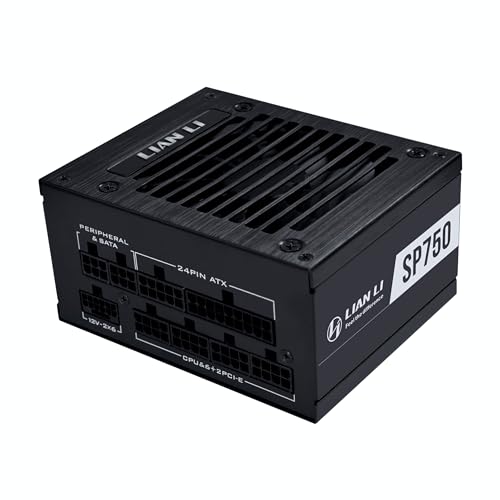
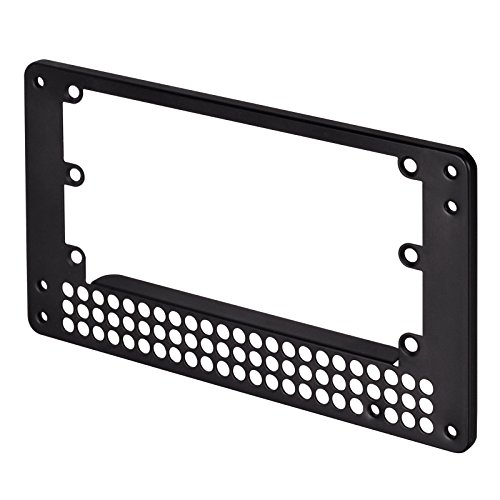
- Mounting: SFX has different mounting positions from ATX. Cases built for SFX include them; an ATX case needs an adapter bracket for an SFX unit.
- Depth: SFX-L is 30 mm deeper than SFX, and some cases take only SFX.
- Cables: Check that supplied cables reach your GPU and CPU sockets. Do not mix modular cables between brands.
- Airflow: Make sure the intake is not blocked by a bracket, a GPU backplate or cable bundles.
For gaming, choose ATX if your case is a standard mid or full tower, because it offers the widest range of wattages, the quietest fans and the easiest cooling; choose SFX or SFX-L only when the case is small enough to require it. Electrically they are alike, using the same connectors and the same ATX voltage rules, so the decision is mostly about physical size, noise and available models.
Our top picks


As an Amazon Associate we earn from qualifying purchases at no extra cost to you.
Size: The Core Difference
According to the ATX and PSU overviews on Wikipedia, SFX12V measures 125 by 63.5 by 100 mm, while SFX-L keeps the same width and height but extends the depth to 130 mm. A standard ATX unit is considerably bigger, around 150 mm wide and 86 mm high, with depths that vary by model. The smaller body is the entire point of SFX: it lets a case designer shrink the build around the PSU. Specific dimensions differ slightly between makers, so confirm them in the product page and the case manual.
Side-by-Side Comparison
| Factor | SFX / SFX-L | ATX |
|---|---|---|
| Case fit | Small and mini-ITX cases; some ATX cases via adapter | Mid and full towers, many mATX cases |
| Fan size | Smaller on SFX, up to 120 mm on SFX-L per the ATX overview | Typically 120 to 140 mm |
| Noise under load | Can be louder, since smaller fans spin faster | Easier to keep quiet |
| Wattage range | Narrower, with fewer very high-wattage options | Widest choice |
| Cable length | Often shorter; suited to compact cases | Longer, suited to towers |
| Connectors | Same standard ATX-style plugs | Same |
| Cooling margin | Denser internals, less thermal headroom | More room, usually cooler |
| Model variety | Fewer lines, mostly premium-leaning | Large selection from budget to premium |
Performance: Does Form Factor Change Power Quality?
Not inherently. Voltage regulation, ripple and protections depend on the design and components, not the case size. Both form factors must meet the same ATX voltage tolerances, which the ATX overview lists as plus or minus five percent on the main rails. What does differ is thermal environment: a compact unit has less space and a smaller fan, so reviewers often watch temperature and noise more closely on SFX models. A premium SFX unit can match an ATX unit electrically, while a cheap one of either type can be poor, so judge each model on its reviews.
Wattage and Modern GPUs
ATX units run from modest wattages to very high ones, covering any GPU. SFX and SFX-L units cover a wide middle range, and a number of recent models state ATX 3.x support with a native 12V-2×6 cable. ATX 3.0 introduced stricter handling of power excursions, and ATX 3.1 introduced the 12V-2×6 connector and shortened the required hold-up time from 17 to 12 milliseconds, per the Wikipedia ATX page. If you plan a flagship graphics card in a very small case, check that an SFX-L unit exists at the wattage the GPU maker recommends, or choose a case that accepts ATX.
Noise and Cooling
A smaller fan must move air faster for the same flow, which generally means more noise at higher load. Many units reduce this with a semi-passive mode that stops the fan at low load. SFX-L partly closes the gap by allowing a larger fan. ATX has the advantage of room: large, slow fans can run quietly while still cooling a unit loaded well below its rating. If quiet operation matters and your case allows ATX, that is the easy path.
Installation and Compatibility
- Mounting: SFX has different mounting positions from ATX. Cases built for SFX include them; an ATX case needs an adapter bracket for an SFX unit.
- Depth: SFX-L is 30 mm deeper than SFX, and some cases take only SFX.
- Cables: Check that supplied cables reach your GPU and CPU sockets. Do not mix modular cables between brands.
- Airflow: Make sure the intake is not blocked by a bracket, a GPU backplate or cable bundles.
Pick X If… Decision Table
| Pick this | If |
|---|---|
| ATX | Your case is a mid tower or larger, you want the most choice and the quietest operation, or you plan a very high-wattage build |
| SFX | Your case is designed around it, such as many mini-ITX cases, and your wattage needs are moderate |
| SFX-L | Your case has 130 mm of depth available and you want a larger, quieter fan or somewhat higher wattage |
| SFX with ATX adapter | You want shorter cables or a clean look in an ATX case, and airflow is not compromised |
Common Mistakes
- Choosing SFX for an ATX case with no benefit. You give up wattage choice and quiet for little gain.
- Not measuring depth. SFX-L may not fit a case that lists SFX only.
- Assuming small means low quality. Quality varies by model; read independent reviews.
- Forgetting the GPU connector. Check that the unit has the cables your card needs, native 12V-2×6 where applicable.
- Skimping on wattage. Follow the GPU maker’s recommended PSU rating regardless of form factor.
Safety
Turn off and unplug the system before swapping any PSU. Never open a power supply. For 12V-2×6 connectors, follow GPU and PSU maker guidance, push the plug in fully and stop use if heat damage appears. Contact the maker or a technician if unsure.
Frequently Asked Questions
Is SFX as good as ATX for gaming?
Electrically it can be, as both follow the same voltage rules and connectors. The differences are size, fan noise potential and available wattages. A well-reviewed SFX unit is fine for gaming within its rating.
Can an SFX PSU power a high-end graphics card?
Some SFX and SFX-L units are rated at wattages that GPU makers recommend for current cards, and some state ATX 3.x support. Compare the GPU maker’s recommendation with the unit’s 12V rating and connectors.
Why are SFX power supplies often louder?
Smaller fans must spin faster to move the same air. SFX-L allows a larger fan, which helps. Semi-passive modes reduce noise at low load.
Will an SFX unit fit my ATX case?
Usually with an adapter bracket. Ensure it is secure and that the PSU’s fan can draw air without obstruction.
Do SFX and ATX use the same cables?
The connector types are the same. Cable lengths differ, and cables from different makers are not interchangeable, so use those supplied for your specific unit.
Which is better for a first-time builder?
ATX in a standard case is generally easier: more room, longer cables and more models. SFX is worth it only if you want a compact build.
FAQ
Performance: Does Form Factor Change Power Quality?
Is SFX as good as ATX for gaming?
Can an SFX PSU power a high-end graphics card?
Why are SFX power supplies often louder?
Will an SFX unit fit my ATX case?
Do SFX and ATX use the same cables?
Which is better for a first-time builder?
More from Amazon
Programs that pair well with the guide above. Offers and eligibility are set by Amazon and may change.
Free shipping on eligible items, Prime Video and more. Eligible new members can start with a free trial.
Start a Prime free trialAd-free music streaming. Eligible new subscribers can start with a free trial.
Try Music Unlimited freeA Prime membership for ages 18-24 with a trial period. Eligibility is set by Amazon.
See Prime for Young AdultsAudiobooks and podcasts to listen to on the go. Eligible new members can start with a free trial.
Try Audible freeAs an Amazon Associate we earn from qualifying purchases.