Our Short List of 3

- Best for: Right-handed players who want an ergonomic ultralight mouse for ranked and tournament play.
- Weight: 60 g
- Sensor: HERO 2, up to 44,000 DPI, 888 IPS, 88 G acceleration
- Polling rate: up to 8,000 Hz with LIGHTSPEED wireless
- Battery life: up to 95 hours on a single charge

- Best for: Palm grip players who want a light ergonomic mouse with a proven shape for long matches.
- Weight: 63 g
- Sensor: Focus Pro 30K optical sensor, up to 30,000 DPI
- Switches: Gen-3 optical switches
- Buttons: 5 programmable buttons

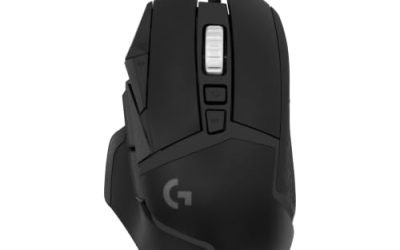
- Best for: Players who want many programmable buttons and a versatile scroll wheel alongside competitive tracking.
- Sensor: HERO 25K gaming sensor
- Switches: LIGHTFORCE hybrid optical-mechanical switches
- Buttons: 13 programmable buttons
- Scroll wheel: infinite scroll toggle, dual-mode
All 4 Picks at a Glance
| Product | Specs | Action |
|---|---|---|
| Logitech G PRO X Superlight 2 DEX |
| Check price on Amazon |
| Razer DeathAdder V3 Pro |
| Check price on Amazon |
| Logitech G502 X PLUS |
| Check price on Amazon |
 Razer Basilisk V3 Pro 35K |
| Check price on Amazon |
Our Top Picks
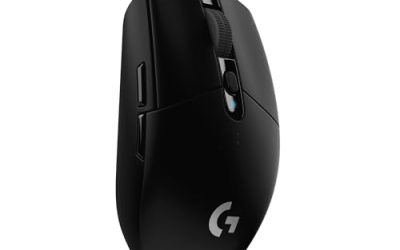
- Razer DeathAdder V3 Pro Wireless Gaming Mouse1000 Hz5.01 x 2.65 x 1.69 inches0.1 poundsCheck on Amazon
- Logitech G502 X Plus Wireless RGB Gaming MouseWireless7.1 x 4.6 x 2.7 inches0.84 poundsCheck on Amazon
The real decision in competitive gaming is not which mouse looks fastest on a spec sheet. It is which shape, weight, and sensor let you hit the same flick, hold the same angle, and reset your aim without thinking about the hardware in your hand. A mouse that fights your grip or drags on the pad costs rounds, even when its sensor is excellent.
This guide is for FPS players who compete in ranked ladders, LAN events, and online tournaments, and for players who want one mouse that covers aim-heavy shooters and long practice sessions. Every pick below is a wireless mouse with a current Amazon listing, chosen from its listed sensor, weight, polling rate, battery life, and button layout, so you can compare the hardware on facts rather than hype.
Quick Picks
As an Amazon Associate we earn from qualifying purchases
| Product | Best for | Key spec from title |
|---|---|---|
| Logitech G PRO X Superlight 2 DEX | Right-handed ergonomic grip with pro-grade tracking | 60 g, HERO 2 sensor up to 44,000 DPI |
| Razer Viper V3 Pro | Symmetrical ultralight flick aiming | 54 g, 35K DPI optical sensor, 8K polling |
| Razer DeathAdder V3 Pro | Palm grip players who want a proven ergonomic shape | 63 g, Focus Pro 30K optical sensor |
| Logitech G502 X PLUS | Extra buttons and a versatile scroll wheel | HERO 25K sensor, 13 buttons, LIGHTSYNC RGB |
| Razer Basilisk V3 Pro 35K | Long sessions with many controls at your thumb | 35K DPI sensor, HyperScroll tilt wheel, 140 hr battery |
How to Choose
Shape and grip come first
No sensor can fix a shape that does not fit your hand. Palm grip players need a taller shell with a curved back that fills the hand, while claw and fingertip players need a shorter, flatter body they can lift and reposition quickly. Measure your hand from wrist to middle fingertip and compare it with the listed length of each mouse before you buy. A mouse that is too long forces your fingers forward and dulls your clicks, while one that is too short leaves your palm unsupported during long matches. Try to match the shape to your grip first, then worry about the sensor.
Weight and glide decide how fast you reset
Lighter mice need less force to start and stop, which makes flicks feel quicker and reduces wrist fatigue over a long session. Most competitive mice in this guide sit between 54 g and 63 g, while feature-heavy models add buttons and wheels at the cost of extra grams. Weight alone is not everything, though. The feet under the mouse and the surface of your pad decide how smoothly it glides, so pair a light mouse with a clean, even pad and keep the feet free of dust. If you lift the mouse often to recenter, a lighter body pays off every round.
Sensor and polling rate set the tracking ceiling
The sensor decides how accurately the mouse follows your hand at high speed, and the polling rate decides how often it reports its position to your computer. Look for a modern optical sensor with a high maximum DPI, a fast tracking speed measured in IPS, and strong acceleration handling, because those numbers show how the sensor behaves during a hard flick rather than a slow drag. An 8,000 Hz polling rate reports movement more often than a 1,000 Hz rate, which can make tracking feel slightly smoother. Check that your computer and game can use the higher rate before you count on it.
Battery life and connection keep you in the match
A wireless mouse is only useful if it stays connected and charged through your longest sessions. Look for a listed battery life that covers several days of play, a USB-C charging port for quick top-ups, and a 2.4 GHz wireless link built for low latency rather than Bluetooth alone. Some mice also work with a wireless charging mat, which removes charging from your routine entirely. Keep the receiver close to the mouse, away from metal and other wireless devices, and charge the mouse between sessions so a dead battery never ends a match early.
The 5 Best Options
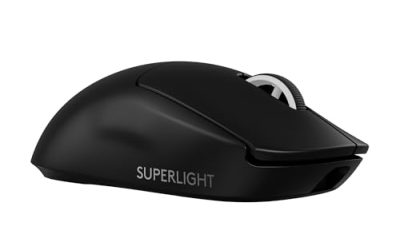
Logitech G PRO X Superlight 2 DEX
- Best for: Right-handed players who want an ergonomic ultralight mouse for ranked and tournament play.
- Weight: 60 g
- Sensor: HERO 2, up to 44,000 DPI, 888 IPS, 88 G acceleration
- Polling rate: up to 8,000 Hz with LIGHTSPEED wireless
- Battery life: up to 95 hours on a single charge
Right-handed players who want an ergonomic ultralight mouse for ranked and tournament play.
The asymmetrical shape is built for the right hand only, so left-handed players should choose a symmetrical model instead.
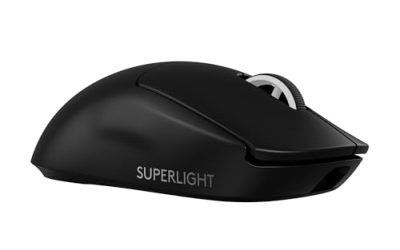
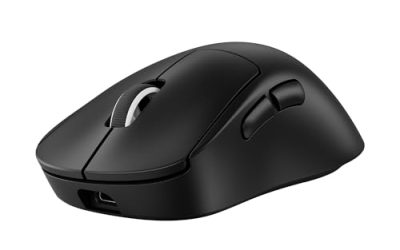
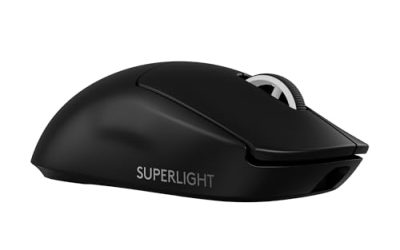
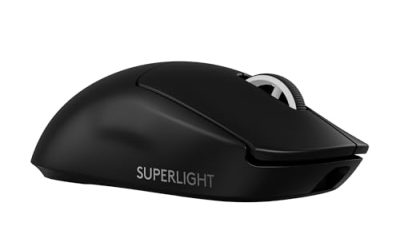
The Superlight 2 DEX takes the proven Superlight formula and reshapes it for right-handed players who want an ergonomic shell without giving up ultralight weight. Its asymmetrical body supports the palm and thumb during long matches, while the HERO 2 sensor tracks fast flicks with the precision competitive shooters demand. The LIGHTSPEED wireless link runs at up to 8,000 Hz polling, so movement feels immediate and consistent. With five programmable buttons and a long battery life, it suits players who want a focused, tournament-ready mouse with nothing extra in the way.
Watch out for: The asymmetrical shape is built for the right hand only, so left-handed players should choose a symmetrical model instead.
Razer Viper V3 Pro
The Viper V3 Pro is built around one idea: remove every gram and every delay between your hand and the screen. At 54 g, it is the lightest mouse in this guide, and its symmetrical shell suits claw and fingertip grips that lift and recenter constantly. The 35K optical sensor and 8,000 Hz polling keep tracking steady during fast flicks, while the Gen-3 optical switches give clicks a crisp, consistent feel. Eight programmable controls cover the essentials without adding bulk, and the long battery life carries it through a full week of practice and matches.
Specs
- Weight: 54 g
- Sensor: 35K DPI optical sensor
- Polling rate: 8,000 Hz
- Switches: Gen-3 optical switches
- Buttons: 8 programmable controls
- Battery life: up to 95 hours
- Shape: symmetrical, right- and left-handed friendly
Best for: Claw and fingertip players who flick fast and want the lightest symmetrical mouse available.
Watch out for: The low, symmetrical shell offers little palm support, so palm grip players may find it less comfortable over long sessions.
Razer DeathAdder V3 Pro
- Best for: Palm grip players who want a light ergonomic mouse with a proven shape for long matches.
- Weight: 63 g
- Sensor: Focus Pro 30K optical sensor, up to 30,000 DPI
- Switches: Gen-3 optical switches
- Buttons: 5 programmable buttons
Palm grip players who want a light ergonomic mouse with a proven shape for long matches.
The right-handed shape does not suit left-handed players, and the standard model runs at a 1,000 Hz polling rate unless paired with the separate HyperPolling dongle bundle.
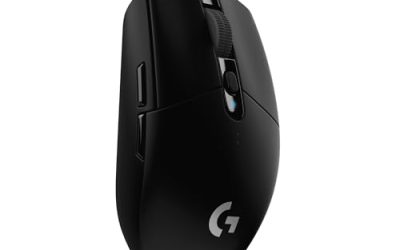
The DeathAdder V3 Pro keeps the ergonomic shape that has defined this line for years and rebuilds it at just 63 g. Its tall, curved body fills the palm and steadies the hand during long holds and slow, controlled aim, which makes it a natural fit for players who rest their whole hand on the mouse. The Focus Pro 30K optical sensor tracks cleanly at high speed, HyperSpeed wireless keeps the connection stable in crowded wireless environments, and the battery runs for up to 90 hours. Five programmable buttons keep the layout simple and reliable.
Watch out for: The right-handed shape does not suit left-handed players, and the standard model runs at a 1,000 Hz polling rate unless paired with the separate HyperPolling dongle bundle.
Logitech G502 X PLUS
- Best for: Players who want many programmable buttons and a versatile scroll wheel alongside competitive tracking.
- Sensor: HERO 25K gaming sensor
- Switches: LIGHTFORCE hybrid optical-mechanical switches
- Buttons: 13 programmable buttons
- Scroll wheel: infinite scroll toggle, dual-mode
Players who want many programmable buttons and a versatile scroll wheel alongside competitive tracking.
It is heavier than the ultralight picks in this guide, so players who lift the mouse constantly may prefer a lighter model.
The G502 X PLUS is the pick for players who want competitive tracking plus a full set of controls. Its HERO 25K sensor and LIGHTFORCE hybrid switches deliver the speed and click feel that ranked play demands, while thirteen buttons put abilities, weapons, and push-to-talk within easy reach of your thumb. The dual-mode scroll wheel switches between precise steps and free spin, which helps in games with long weapon lists or fast inventory scrolling. LIGHTSYNC RGB adds a personal touch, and the battery runs for up to 130 hours between charges.
Watch out for: It is heavier than the ultralight picks in this guide, so players who lift the mouse constantly may prefer a lighter model.
Razer Basilisk V3 Pro 35K
- Best for: Players who want a feature-rich ergonomic mouse with a long battery life for marathon sessions.
- Weight: 112 g
- Sensor: Focus Pro 35K optical sensor Gen-2, up to 35,000 DPI
- Switches: Gen-3 optical switches
- Buttons: 13 customizable controls
Players who want a feature-rich ergonomic mouse with a long battery life for marathon sessions.
At 112 g it is the heaviest mouse in this guide, and the large shell suits medium to large hands better than small ones.
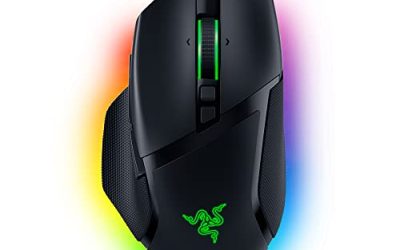
The Basilisk V3 Pro 35K is the do-everything option for players who want a full-featured mouse that still tracks at a competitive level. Its ergonomic shell supports the palm, the HyperScroll tilt wheel scrolls in four directions and switches between tactile and free-spin modes, and thirteen customizable controls cover abilities, items, and communication. The 35K optical sensor Gen-2 keeps aim steady during fast movement, Gen-3 optical switches keep clicks sharp, and the battery runs for up to 140 hours. Chroma RGB lighting rounds out a mouse built for long, varied sessions.
Watch out for: At 112 g it is the heaviest mouse in this guide, and the large shell suits medium to large hands better than small ones.
Which One Fits Your Situation
You play fast flick-heavy shooters
Choose the Razer Viper V3 Pro. Its 54 g body and symmetrical shell make it easy to lift, recenter, and snap between targets, while the 35K sensor and 8,000 Hz polling keep tracking tight during hard flicks. It is the most direct tool in this guide for aim-heavy games where the first shot decides the round.
You rest your palm on the mouse for hours
Choose the Razer DeathAdder V3 Pro or the Logitech G PRO X Superlight 2 DEX. Both offer tall, ergonomic shells that support the palm through long matches, and both stay under 65 g. Pick the DeathAdder for the classic curved shape, or the Superlight 2 DEX for the newer sensor and faster polling.
You want extra buttons and a smarter scroll wheel
Choose the Logitech G502 X PLUS or the Razer Basilisk V3 Pro 35K. Both give you thirteen controls plus a scroll wheel that switches modes, so abilities, weapons, and menus sit under your thumb. The G502 X PLUS is the lighter of the two, while the Basilisk lasts longer on a charge.
You want the longest battery life
Choose the Razer Basilisk V3 Pro 35K. Its battery runs for up to 140 hours, the longest in this guide, so you can play for days between charges. The Logitech G502 X PLUS is the next best choice here, with up to 130 hours and wireless charging support.
Common Mistakes
- Buying on maximum DPI alone instead of checking shape, weight, and grip fit first.
- Choosing a heavy feature-packed mouse when your aim style relies on constant lifting and recentering.
- Ignoring polling rate compatibility and assuming every computer and game uses the highest setting.
- Placing the wireless receiver far from the mouse or behind metal, which can weaken the connection.
- Skipping the return window check before committing to a shape you have never held.
Frequently Asked Questions
What matters most in a mouse for competitive gaming?
Shape, weight, and sensor quality matter more than any single headline number. A mouse that fits your grip lets you aim consistently, a light body makes flicks and resets easier, and a modern optical sensor tracks accurately at high speed. Get those three right first, then compare polling rate, battery life, and extra buttons.
Is wireless good enough for competitive play?
Yes, when the mouse uses a dedicated 2.4 GHz wireless link built for low latency. Every mouse in this guide uses that kind of connection, and several offer polling rates up to 8,000 Hz. Keep the receiver close to the mouse and charge it between sessions for the most reliable performance.
How light should a competitive gaming mouse be?
Most competitive mice sit between 54 g and 65 g, and lighter bodies make fast flicks and frequent lifting easier on the wrist. Feature-heavy mice run heavier because of extra buttons, wheels, and larger batteries. Choose the lightest mouse that still has the shape and controls you need.
Does a higher polling rate make a real difference?
A higher polling rate reports the mouse position to your computer more often, which can make tracking feel smoother and more responsive. The difference is subtle at 1,000 Hz and above, and your computer and game must support the higher rate. Shape and sensor quality still matter more than polling alone.
FAQ
What matters most in a mouse for competitive gaming?
Is wireless good enough for competitive play?
How light should a competitive gaming mouse be?
Does a higher polling rate make a real difference?
More from Amazon
Programs that pair well with the guide above. Offers and eligibility are set by Amazon and may change.
Free shipping on eligible items, Prime Video and more. Eligible new members can start with a free trial.
Start a Prime free trialAd-free music streaming. Eligible new subscribers can start with a free trial.
Try Music Unlimited freeA Prime membership for ages 18-24 with a trial period. Eligibility is set by Amazon.
See Prime for Young AdultsAudiobooks and podcasts to listen to on the go. Eligible new members can start with a free trial.
Try Audible freeAs an Amazon Associate we earn from qualifying purchases.