Our Short List of 3

- Best for: Players who want direct sound shaping and groove tools.

- Best for: Players who want a wider 76-key range for piano-style pieces.

- Best for: Players who want Bluetooth song playback and music creation tools.
All 4 Picks at a Glance
| Product | Specs | Action |
|---|---|---|
| YAMAHA, 61-Key Touch-Sensitive Advanced Portable Keyboard with Power Adapter, (PSRE473) |
| Check price on Amazon |
| Yamaha PSR-EW320 76 Touch Sensitive Key Portable Keyboard for Beginners with Music Rest, Power Adapter |
| Check price on Amazon |
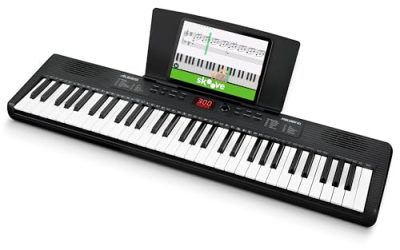
| GO:KEYS 5 Music Creation Keyboard, 61-Note, Graphite |
| Check price on Amazon |
 Casio CT-X700 Portable 61-Key Keyboard |
| Check price on Amazon |
Key takeaways
- Five intermediate keyboards compared for advancing players: 61 and 76 keys, hundreds of voices, accompaniment styles, and Bluetooth music creation.
An intermediate player needs more than a friendly set of lesson songs and a small library of sounds. You already know your way around chords, scales, and simple songs, and you want an instrument that rewards longer practice, supports fuller arrangements, and lets you shape tone with knobs, layers, and accompaniment patterns instead of fighting a limited panel. That next stage calls for a wider sound palette and more control under your hands.
This guide compares five portable keyboards for players who have moved beyond early lessons: two Yamaha models, two Casio models, and one Roland model. Each one offers touch-sensitive keys, a wide voice library, built-in accompaniment, and a recorder or music creation tools, with differences in key count, sound depth, and direct control that suit different practice habits and musical goals.
Quick Picks
As an Amazon Associate we earn from qualifying purchases
| Product | Best for | Key spec from title |
|---|---|---|
| YAMAHA, 61-Key Touch-Sensitive Advanced Portable Keyboard with Power Adapter, (PSRE473) | Live knobs and groove tools | 61 touch-sensitive keys, 820 voices |
| Casio CT-X5000 High Grade Keyboard with 61 Touch Response Keys – Black | Deep sound editing | 61 touch-response keys, 800 tones |
| Yamaha PSR-EW320 76 Touch Sensitive Key Portable Keyboard for Beginners with Music Rest, Power Adapter | Wider 76-key range | 76 touch-sensitive keys, 650 voices |
| GO:KEYS 5 Music Creation Keyboard, 61-Note, Graphite | Bluetooth music creation | 61 touch-sensitive keys, over 1000 sounds |
| Casio CT-X700 Portable 61-Key Keyboard | Compact AiX sound | 61 keys, 600 tones, 195 rhythms |
How to Choose
Match the Key Count to Your Repertoire
Sixty-one keys cover most pop songs, chord work, and accompaniment patterns, and they keep the instrument compact enough for a desk, a bedroom corner, or a move between rooms. Seventy-six keys give you more room for piano-style pieces, wider left-hand patterns, and two-handed passages without shifting octaves. If your song list already reaches into lower bass notes and higher melody lines in the same piece, the wider board removes a constant compromise. If you value portability and a smaller footprint, a 61-key board stays easier to carry, store, and set up for daily practice.
Weigh Voices Against Usable Styles
A large voice count looks impressive on a panel, yet it matters only when the sounds you use often feel musical and distinct. Listen, in your mind, for piano, electric piano, organ, strings, brass, and synth voices that you would actually choose for a song, rather than counting every variation. Accompaniment styles matter in the same way: a smaller set of well-arranged styles that fit pop, rock, jazz, Latin, and ballad playing will serve you better than a huge set of patterns you never select. Choose a keyboard whose core sounds and styles match the music you play each week.
Look for Control That Fits Your Hands
Intermediate playing benefits from knobs, wheels, and buttons that change sound while you play, rather than menus that pull your attention away from the keys. Live control knobs let you shape filter, effect, and volume in real time, while a pitch bend wheel adds expression to melody lines. Registration memory and one-touch settings let you return to a favorite combination without rebuilding it each session. A clear display also helps: you should be able to see the voice, style, tempo, and octave setting at a glance, even in a dim room.
Check Recording, Connection, and Power
A built-in recorder turns practice into a useful habit, because you can capture an idea, listen back, and hear timing or phrasing that slips past you while playing. USB connection to a computer opens notation, lesson, and recording software, while a headphone jack lets you practice late without disturbing anyone in the house. Battery power adds freedom for outdoor playing and for rooms without a nearby outlet, although an included adapter remains the practical choice for long sessions at home. Confirm that the keyboard includes the adapter, music rest, and pedal support you expect before you commit.
The 5 Best Options
YAMAHA, 61-Key Touch-Sensitive Advanced Portable Keyboard with Power Adapter, (PSRE473)
- Best for: Players who want direct sound shaping and groove tools.
Players who want direct sound shaping and groove tools.
The panel holds many functions, so allow time to learn the knob and groove controls.
Casio CT-X5000 High Grade Keyboard with 61 Touch Response Keys – Black
The CT-X5000 suits a player who enjoys editing sound and building arrangements from a deep library. Its AiX Sound Source delivers 800 tones, and the editing tools let you adjust tone, effect, and balance until a voice fits the song in your head. The 17-track recorder supports layered ideas, while registration slots store complete setups for quick recall during practice or performance. Twin speakers give the instrument a full voice in a room, and the touch-response keys reward dynamic playing across piano, organ, and synth sounds. It is a strong pick when you want one keyboard to cover practice, writing, and small gatherings.
Specs:
– 61 touch-response keys
– 800 tones
– 235 rhythms
– AiX Sound Source
– 15W and 15W bass reflex speakers
– 17-track recorder
– 128 registration slots
– 100 DSP effects
Best for: Players who want deep editing, layered recording, and a large tone library.
Watch out for: The editing depth can feel dense at first, so learn one section of the panel at a time.
ASIN: B079PLTF78
Yamaha PSR-EW320 76 Touch Sensitive Key Portable Keyboard for Beginners with Music Rest, Power Adapter
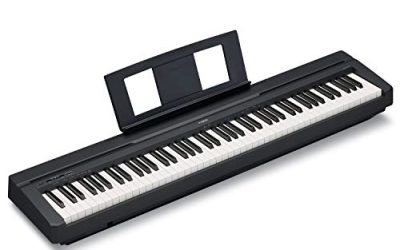
- Best for: Players who want a wider 76-key range for piano-style pieces.
Players who want a wider 76-key range for piano-style pieces.
The wider body needs more desk or stand space than a 61-key model.
GO:KEYS 5 Music Creation Keyboard, 61-Note, Graphite
- Best for: Players who want Bluetooth song playback and music creation tools.
Players who want Bluetooth song playback and music creation tools.
The creation focus means fewer traditional lesson songs than some Yamaha and Casio rivals.
Casio CT-X700 Portable 61-Key Keyboard
- Best for: Players who want a compact AiX keyboard for daily practice.
Players who want a compact AiX keyboard for daily practice.
The speaker system is modest next to larger models, so use headphones for fuller detail.
Which One Fits Your Situation
You Want a Wider Range for Piano Pieces
Choose the PSR-EW320 when your sheet music keeps running out of keys at either end of a 61-key board. Its 76 touch-sensitive keys give you room for wide left-hand chords and high melody lines in the same piece, while Smart Chord and a broad style library support practice across pop and ballad songs. The included music rest and adapter make it easy to set up, and the lesson function helps you work through pieces one section at a time.
You Want to Shape Sound While You Play
Choose the PSR-E473 when knobs, groove tools, and live control matter more than key count. Its Advanced Sound Engine and Groove Creator let you change texture and rhythm while a pattern plays, so practice feels like performance rather than repetition. The 820 voices and 290 styles give you plenty of material to explore, and the touch-sensitive keys respond to dynamic playing across piano, synth, and band sounds.
You Want Deep Editing and Layered Recording
Choose the CT-X5000 when you enjoy building arrangements and saving complete setups. Its 800 tones, 100 DSP effects, and 17-track recorder support layered writing, while 128 registration slots store your favorite combinations for instant recall. Twin 15W speakers fill a room with a full sound, and the AiX engine keeps piano, organ, and synth voices musical across a wide range of styles and songs.
You Want to Play Along With Songs You Love
Choose the GO:KEYS 5 when learning by ear and creating around familiar music drives your practice. Bluetooth audio lets you stream a song from a phone and play along, while over 1000 sounds and over 200 accompaniment styles give you many ways to dress up a chord progression. A mic input adds singing to the mix, and the chord sequencer helps you turn a short idea into a complete arrangement without leaving the keyboard.
Common Mistakes
- Choosing a keyboard by voice count alone, without checking whether the piano, organ, and string voices you use often sound musical.
- Ignoring key count, then finding that piano pieces and wide chord voicings run out of room on a 61-key board.
- Skipping the recorder, even though listening back is one of the clearest ways to hear timing and phrasing.
- Buying without confirming that an adapter, music rest, and pedal jack are included or available for your setup.
- Learning only one style or sound, instead of using accompaniment patterns and registration memory to widen your playing.
Frequently Asked Questions
How many keys does an intermediate player need?
Sixty-one keys suit most pop songs, chord work, and accompaniment patterns, and they keep the keyboard compact for home use. Seventy-six keys suit players who read piano music, play wide chord voicings, or want more range without shifting octaves mid-piece. Choose 61 keys for portability and focused practice, and 76 keys when your repertoire already reaches beyond the smaller range on a regular basis.
Are touch-sensitive keys important at this level?
Yes, touch-sensitive keys matter once you can control dynamics with your hands. They let softer playing sound gentle and firmer playing sound bold, which makes piano, ballad, and expressive melody work far more musical. A keyboard without touch response can feel flat for an intermediate player, even when its voice library is large. Look for touch response or touch sensitivity in the key action before you settle on a model.
What is the difference between voices and accompaniment styles?
Voices are the individual instrument sounds, such as piano, electric piano, organ, strings, brass, and synth tones. Accompaniment styles are rhythmic backing patterns that add drums, bass, and chords behind your playing. A good intermediate keyboard pairs a strong set of core voices with styles that fit the music you play, so you can practice melody, chords, and timing together in a fuller musical setting.
Can I connect an intermediate keyboard to a computer?
Most models in this guide offer USB-MIDI or USB to host connection, which lets you link the keyboard to notation, lesson, and recording software on a computer. That connection opens sheet music display, song recording, and sound editing beyond the built-in panel. Check the connection type and the software you plan to use, and keep a headphone jack in mind for quiet practice at home.
FAQ
How many keys does an intermediate player need?
Are touch-sensitive keys important at this level?
What is the difference between voices and accompaniment styles?
Can I connect an intermediate keyboard to a computer?
More from Amazon
Programs that pair well with the guide above. Offers and eligibility are set by Amazon and may change.
Free shipping on eligible items, Prime Video and more. Eligible new members can start with a free trial.
Start a Prime free trialAd-free music streaming. Eligible new subscribers can start with a free trial.
Try Music Unlimited freeA Prime membership for ages 18-24 with a trial period. Eligibility is set by Amazon.
See Prime for Young AdultsAudiobooks and podcasts to listen to on the go. Eligible new members can start with a free trial.
Try Audible freeAs an Amazon Associate we earn from qualifying purchases.