Our Short List of 3
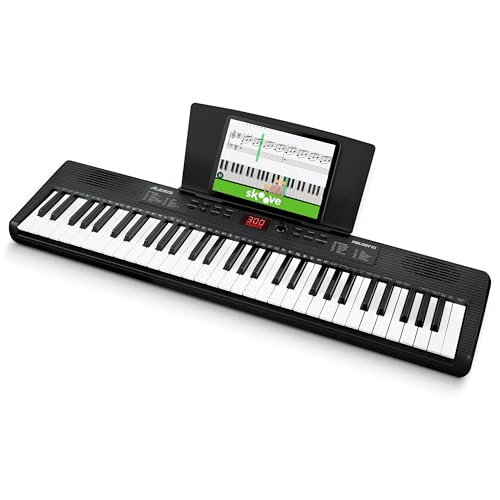
- Best for: A first-time player who wants the most sounds and guided lessons in a keyboard-only package.
- 61 keys
- 300 sounds and 300 rhythms
- 30 demo songs, metronome and record mode
- Skoove and Melodics lesson access

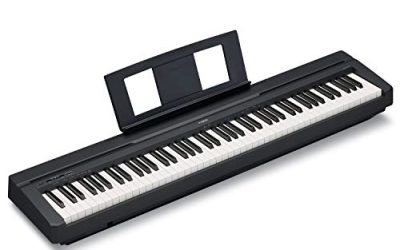
- Best for: An adult returning to piano who wants dependable tones and app-based practice.
- 61 standard keys
- 122 tones and 61 rhythms
- 60 built-in songs
- Dance Music Mode
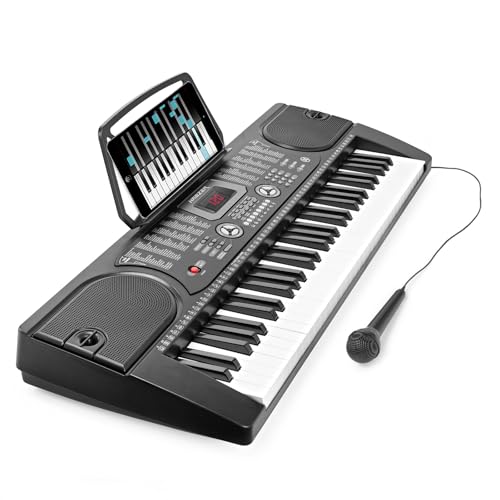
- Best for: A younger player or a household that wants a ready-to-play keyboard with no assembly.
- 61 keys
- Built-in speakers
- 255 timbres and 255 rhythms
- 24 demo songs
All 5 Picks at a Glance
| Product | Specs | Action |
|---|---|---|
| Alesis Melody 61 MK4 |
| Check price on Amazon |
| Casio Casiotone CT-S100 |
| Check price on Amazon |
| Hamzer 61 Key Beginner |
| Check price on Amazon |
 Ktaxon 61 Key with Lighted Keys |
| Check price on Amazon |
 SFESGRER 61-Key |
| Check price on Amazon |
Key takeaways
- Five piano keyboards that fit a 100 budget, from the Alesis Melody 61 MK4 to the Casio CT-S100, with key counts, tones and included kits compared.
A piano keyboard in this tier is a first instrument, not a forever instrument, and the real decision is what a beginner gives up to stay inside the budget. Full-size keys, a usable piano tone and a headphone jack matter every day, while a huge voice count and a bundled bench matter far less once practice becomes a habit. The wrong pick still plays notes, but it teaches the wrong finger habits or sits unused because the sound wears thin after a week.
This guide is for first-time players, parents buying for a child, and adults returning to the piano after years away. Each keyboard below was picked from its Amazon listing, using the key count, tones, rhythms and included accessories the listing itself states, and every pick below is a 61-key model that fits this tier.
Quick Picks
As an Amazon Associate we earn from qualifying purchases
| Product | Best for | Key spec from title |
|---|---|---|
| Alesis Melody 61 MK4 | First lessons on a tight budget | 300 sounds and lesson access |
| Casio Casiotone CT-S100 | A brand-name board for everyday practice | 122 tones and USB to Host |
| Hamzer 61 Key Beginner | The simplest keyboard-and-mic setup | 255 timbres with built-in speakers |
| Ktaxon 61 Key with Lighted Keys | Guided learning with a full kit | Lighted keys with stand and bench |
| SFESGRER 61-Key | Light-up keys and the widest kit | 200 tones with recording and playback |
How to Choose
Key Count and Key Size
Sixty-one full-size keys cover five octaves, which is enough for most beginner pieces and for both hands to practise together without crowding. Smaller keyboards with 44 or 49 keys look similar in a photo, yet they force a player to shift octaves in the middle of a song, and that habit is hard to unlearn later. Key size matters as much as count: full-size keys train finger spacing that transfers to a real piano, while narrow keys suit small hands only for a short while. At this tier, expect unweighted keys that press down easily, and treat any mention of touch response as a bonus rather than a promise.
Sound Library and Piano Tone
A large voice count looks generous on a listing, yet most of those voices will never be used, and many of them sound alike once the novelty fades. What matters is the main piano tone, because that is the sound a beginner hears for hours every week. Listen for a tone that stays clear when several notes ring together, and be wary of listings that hide the piano sound behind dozens of synth effects. Rhythm accompaniments and demo songs add variety, but they should support practice rather than replace it. A keyboard with a modest library and a clean piano voice will outlast a louder board with hundreds of thin sounds.
Learning Features That Actually Help
Light-up keys, teaching modes and lesson apps all promise faster learning, yet they help in different ways, and the wrong one can become a distraction. Light-up keys guide finger placement through a first song, which suits a child who cannot yet read notation. A metronome and a record mode matter more over time, because they expose rushed timing and let a player hear real progress. Lesson access bundled with a keyboard is useful only when the lessons match the player’s level and keep arriving after the first month. Before choosing on features alone, check that the keys, the piano tone and the included accessories are right first.
What Comes in the Box
A kit that includes a stand, bench, headphones and microphone can save a separate shopping trip, yet the bundle is only a bargain when every piece is actually wanted. A stand that wobbles and a bench that sits too low will be replaced within weeks, so a keyboard-only pick plus a sturdy table is sometimes the smarter route. Check the listing line by line: some versions include a power adapter while others expect batteries, and some bundle versions cost far more than the keyboard on its own. Count the accessories that solve a real problem in the room where the keyboard will live, and ignore the rest.
The 5 Best Options
Alesis Melody 61 MK4
- Best for: A first-time player who wants the most sounds and guided lessons in a keyboard-only package.
- 61 keys
- 300 sounds and 300 rhythms
- 30 demo songs, metronome and record mode
- Skoove and Melodics lesson access
A first-time player who wants the most sounds and guided lessons in a keyboard-only package.
The bundle version with a stand, bench and headphones is a different listing and sits above this tier, so check the exact listing before buying. Confirm it is still sold before buying.
The Melody 61 MK4 is the plainest pick in this guide, and that is exactly why it leads the list. Alesis gives a first-time player 61 keys, 300 sounds and 300 rhythms, plus 30 demo songs, a metronome and a record mode, without wrapping the keyboard in a stand and bench that push the bundle over this tier. Lesson access through Skoove and Melodics adds structure for anyone starting from zero. The trade is honest: the keys are not touch-sensitive, so loud and soft playing depends on the volume control rather than finger pressure.
Watch out for: The bundle version with a stand, bench and headphones is a different listing and sits above this tier, so check the exact listing before buying. Confirm it is still sold before buying.
Casio Casiotone CT-S100
- Best for: An adult returning to piano who wants dependable tones and app-based practice.
- 61 standard keys
- 122 tones and 61 rhythms
- 60 built-in songs
- Dance Music Mode
An adult returning to piano who wants dependable tones and app-based practice.
Check whether the power adapter is included in the exact listing variant, since some versions sell the keyboard on its own. Confirm it is still sold before buying.
The CT-S100 is the only pick here from a long-established keyboard maker, and the difference shows in the sounds rather than the accessory count. Its 61 standard keys play 122 tones and 61 rhythms, with 60 built-in songs and a Dance Music Mode for players who want to experiment beyond scales. A USB to Host connection links the keyboard to learning apps on a phone or computer, which suits an adult returning to practice with structured lessons. The box stays simple, so anyone expecting a stand, bench and microphone in the same carton should look at the kit picks below instead.
Watch out for: Check whether the power adapter is included in the exact listing variant, since some versions sell the keyboard on its own. Confirm it is still sold before buying.
Hamzer 61 Key Beginner
- Best for: A younger player or a household that wants a ready-to-play keyboard with no assembly.
- 61 keys
- Built-in speakers
- 255 timbres and 255 rhythms
- 24 demo songs
A younger player or a household that wants a ready-to-play keyboard with no assembly.
No stand or bench is included, so budget for a table or a separate stand. Confirm it is still sold before buying.
The Hamzer is the simplest instrument in this guide, and its appeal is that there is almost nothing to set up. Sixty-one keys sit between two built-in speakers, with 255 timbres and 255 rhythms to explore and a microphone and keynote stickers in the box for a younger player. There is no stand, bench or lesson subscription to assemble, so the keyboard works on a table straight out of the carton. Sound quality will not match a brand-name board, and the panel packs a lot of small buttons into a narrow strip, so expect a short learning curve before practice feels natural.
Watch out for: No stand or bench is included, so budget for a table or a separate stand. Confirm it is still sold before buying.
Ktaxon 61 Key with Lighted Keys
- Best for: A parent buying a first keyboard for a child who learns by following lights.
- 61 keys with lighted keys
- Headphones and microphone included
- Music rest and power adapter included
- Stand and piano bench included
A parent buying a first keyboard for a child who learns by following lights.
The lighted keys teach note positions, not timing or dynamics, so pair the keyboard with lessons or a metronome. Confirm it is still sold before buying.
The Ktaxon is the most complete kit in this guide, and the lighted keys are the reason to pick it over the other bundles. Sixty-one keys light up to guide finger placement through early songs, while headphones, a microphone, a music rest, a power adapter, a stand and a piano bench all arrive in the same box. That combination suits a parent buying a first instrument for a child, since nothing else is needed on day one. The keys are light and the sound is basic, so a player who outgrows the teaching modes will eventually want a board with a stronger piano tone.
Watch out for: The lighted keys teach note positions, not timing or dynamics, so pair the keyboard with lessons or a metronome. Confirm it is still sold before buying.
SFESGRER 61-Key
- Best for: A beginner who wants light-up keys and a full kit in a single purchase.
- 61 light-up keys
- 200 tones, 200 rhythms and 60 demo songs
- 8 drum kits
- Built-in dual speakers and LED display
A beginner who wants light-up keys and a full kit in a single purchase.
Stock on this listing has run low before, so check availability and the exact included accessories. Confirm it is still sold before buying.
The SFESGRER pairs light-up keys with the widest accessory set of any pick here, which makes it the kit to choose when a single box has to cover everything. Sixty-one illuminated keys guide early practice, backed by 200 tones, 200 rhythms, 60 demo songs and 8 drum kits, plus a one-touch recording feature for hearing progress back. A stand, music stand, microphone and bench come with the keyboard, and the LED display keeps settings visible while playing. The brand is far less established than Casio or Alesis, so treat the listing details and the included accessories as the things to verify first.
Watch out for: Stock on this listing has run low before, so check availability and the exact included accessories. Confirm it is still sold before buying.
Which One Fits Your Situation
For a Child Starting Lessons
A child learning first songs needs guidance more than sound variety, so the Ktaxon leads here. Its lighted keys show where fingers go, and the stand, bench, headphones and microphone arrive in the same box, which means practice can start the day the keyboard does. The SFESGRER is the backup pick when its light-up keys and recording feature appeal more.
For an Adult Returning to Piano
An adult returning after years away usually wants a dependable piano tone and a way to practise with structure, not a toy-like bundle. The Casio CT-S100 fits that brief, with 122 tones, a USB to Host link for learning apps, and a compact body that sits on a desk or table. Skip the light-up kits unless guided keys are the main attraction.
For the Tightest Budget
When the keyboard alone has to carry the purchase, the Alesis Melody 61 MK4 gives the most for the least. Three hundred sounds, 300 rhythms, lesson access and an included adapter and music rest cover the first months of learning without a stand or bench. Add a sturdy table and a pair of headphones later, once practice becomes a daily habit.
For a Single Box That Covers Everything
When one delivery has to include the stand, the seat and the extras, the SFESGRER is the pick. Light-up keys, 200 tones, recording and a bench in the same carton suit a household that wants to start immediately. The Ktaxon covers the same ground with a simpler sound set, so choose between them on the teaching features, not the accessory list.
Common Mistakes
- Buying a 44-key or 49-key model and expecting it to play beginner piano pieces without shifting octaves.
- Judging a keyboard by its voice count instead of listening to the main piano tone first.
- Ordering the bundle version of a keyboard after reading the keyboard-only listing, or the reverse, and getting a different set of accessories.
- Assuming a power adapter, stand or bench is included when the listing sells the keyboard on its own.
- Expecting weighted or touch-sensitive keys at this tier, then blaming the keyboard for a feel it was never built to give.
Frequently Asked Questions
Are 61 keys enough for a beginner?
Yes, for the first years of learning. Sixty-one keys cover five octaves, which holds almost every beginner piece and lets both hands practise together. A player who moves on to advanced classical repertoire will eventually want 88 keys, but that is a later purchase, not a first one.
Do I need a stand and a bench as well?
Not always. A keyboard on a sturdy table works fine for practice, and several picks in this guide include a stand and bench in the box. Check the exact listing before ordering, since keyboard-only versions and bundle versions are sold separately, and a wobbly stand is worse than a solid table.
Are light-up keys worth it for learning?
Light-up keys help a new player find the right notes for a first song, which keeps early practice encouraging. They do not teach timing, dynamics or reading music, so they work best beside a metronome, a lesson book or a teacher. A player who already reads notation will get little extra value from them.
Can a keyboard in this tier replace piano lessons?
No. A keyboard in this tier is a practice tool, and it works best with guidance from a teacher, a lesson book or a structured app. Lessons correct hand position and timing in ways a keyboard alone cannot, while the instrument itself keeps daily practice possible between sessions.
FAQ
Are 61 keys enough for a beginner?
Do I need a stand and a bench as well?
Are light-up keys worth it for learning?
Can a keyboard in this tier replace piano lessons?
More from Amazon
Programs that pair well with the guide above. Offers and eligibility are set by Amazon and may change.
Free shipping on eligible items, Prime Video and more. Eligible new members can start with a free trial.
Start a Prime free trialAd-free music streaming. Eligible new subscribers can start with a free trial.
Try Music Unlimited freeA Prime membership for ages 18-24 with a trial period. Eligibility is set by Amazon.
See Prime for Young AdultsAudiobooks and podcasts to listen to on the go. Eligible new members can start with a free trial.
Try Audible freeAs an Amazon Associate we earn from qualifying purchases.